

Four people just came closer to the Moon than any humans in fifty years. On April 6, 2026, the Artemis II crew swung around the lunar far side, photographing ancient craters and lava flows that no crew had witnessed since Gene Cernan lifted off the surface in December 1972. They were 406,771 kilometers from Earth, a new distance record. Then they splashed down off the coast of San Diego, and came home. Without landing.
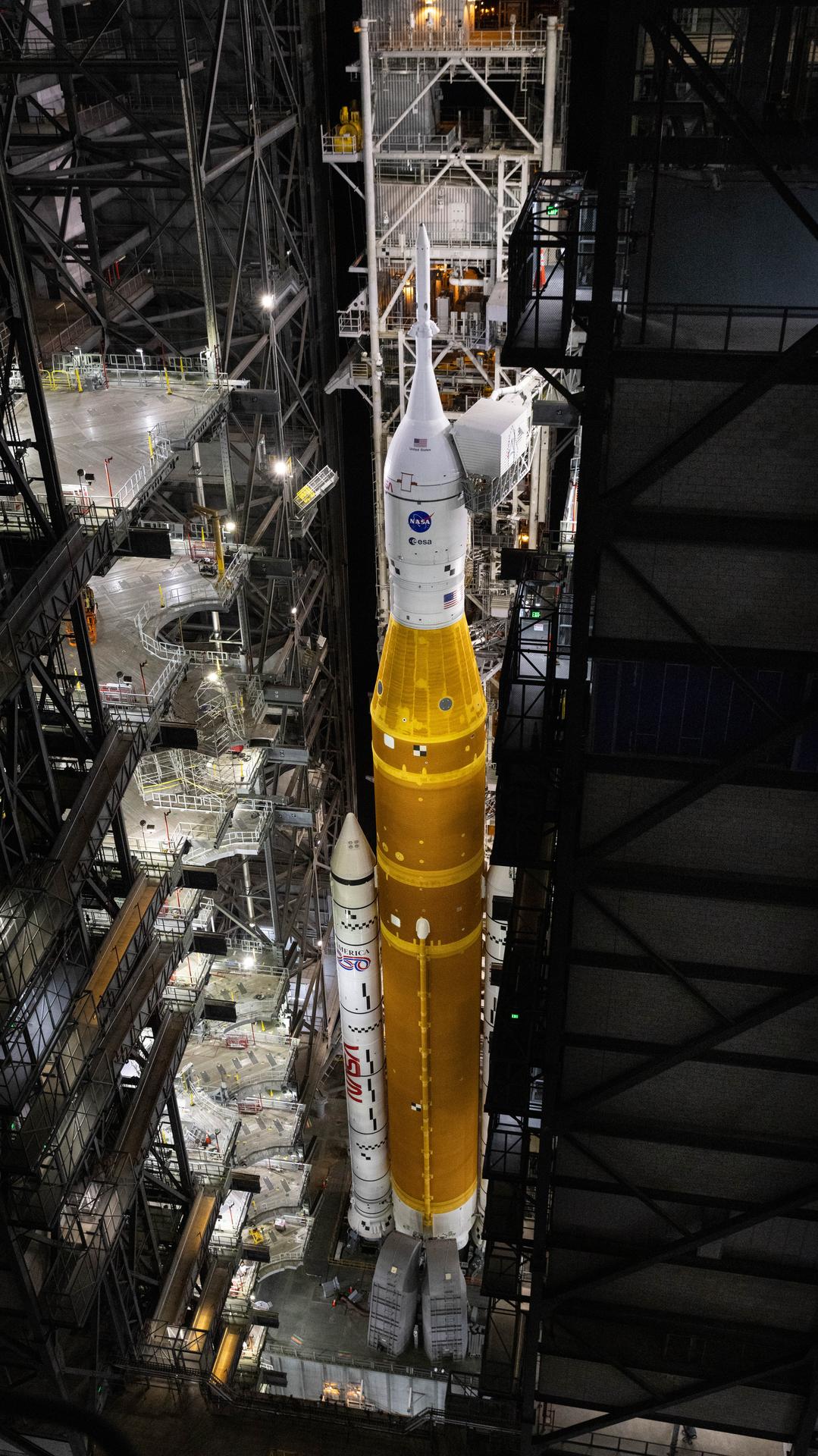
The mission that was supposed to follow them to the surface will not land either. On February 27, 2026, NASA Administrator Jared Isaacman announced a major overhaul of the Artemis program at Kennedy Space Center. Artemis III, previously the agency’s flagship lunar landing mission, has been restructured into an orbital test flight. The crew will launch on the Space Launch System in mid-2027, rendezvous with one or both commercial lunar landers in low Earth orbit, validate life support and propulsion systems, and test the new Axiom Extravehicular Mobility Unit (AxEMU) suits in microgravity. No descent. No footprints.
The first crewed lunar landing of the Artemis era is now scheduled for Artemis IV, in early 2028.
A timeline that keeps moving
When the Artemis program flew its first uncrewed mission in 2022, astronauts were scheduled to walk on the Moon by 2024. That timeline began its first slip in January 2024, when NASA pushed the landing to no earlier than September 2026, citing unexpected behavior in the Orion heat shield during Artemis I’s reentry: the ablative material shed more mass than models predicted, a phenomenon engineers called “char loss.” Root cause analysis took months.
By December 2024, the date had moved again, to mid-2027. By January 2026, a 2028 landing seemed the most realistic target. Then Isaacman’s February announcement converted Artemis III into an orbital mission entirely, reaching mid-2027 but without any plan to reach the surface.
Each delay has compounded the last. At the center of the cascading schedule is the Human Landing System, the commercial contract that tasked SpaceX’s Starship HLS and Blue Origin’s Blue Moon with ferrying astronauts from lunar orbit to the surface. Starship’s concept of operations requires orbital propellant transfer and multiple tanker flights before a crewed landing attempt, a genuinely novel logistics chain that has proven difficult to compress into any firm schedule. NASA’s own Office of Inspector General and the Government Accountability Office both flagged programmatic and technical risks with the HLS contracts as far back as 2021, warning that “programmatic and technical risks continued to emerge.”
The spacesuit picture has been similarly uncertain. The AxEMU suit, developed by Axiom Space under NASA contract, still awaits a flight test in 2027. As of April 2026, NASA and Axiom had not yet confirmed whether that test will occur on Artemis III or on the International Space Station.
Isaacman framed the February restructuring as a deliberate reset rather than another slip: “We’ve got to get back to basics.” The exploration upper stage has been cancelled. The architecture has been simplified. The program is targeting at least one surface landing per year from 2028 onward.
What Artemis III will actually do
The redesigned mission is not without purpose. Rendezvous and docking in orbit, integrated system checkout, and suit validation in microgravity are all prerequisites for a landing attempt. The Artemis II crew performed manual piloting demonstrations during their lunar flyby, collecting data on Orion’s handling that will directly inform the docking operations planned for Artemis III. These are serious engineering milestones. They just no longer carry astronauts to the surface.
Artemis IV is now the first lunar landing mission of the program, with Artemis V following later in 2028. Whether those dates hold will depend on whether SpaceX and Blue Origin can successfully demonstrate their landers during Artemis III’s orbital phase, and whether the AxEMU suit is certified for surface extravehicular activity in time. The Moon’s south pole, with its permanently shadowed craters and suspected water ice, has been waiting since the program was announced. It will keep waiting a little longer.
If you want to understand what Artemis II’s crew experienced on the way past, our deep dive on the overview effect captures what that kind of proximity does to the people who witness it.
The Moon keeps appearing in the window, closer each mission, and each time the crew comes home before they touch it.
