

There are places on the Moon that have not seen sunlight in billions of years. They sit at the bottom of craters near the south pole, craters so deep and so close to the lunar horizon that the sun’s light grazes past and never reaches the floor. In those shadows, temperatures drop to around minus 250 degrees Celsius: colder than the surface of Pluto, colder than anywhere on any other body in the solar system that we regularly think about visiting. In that cold, for billions of years, water ice has been collecting. It arrived by comet and asteroid, molecule by molecule, and then it stayed.
The ice is real. We know this. In 2009, NASA deliberately crashed a spent rocket stage into Cabeus crater at the lunar south pole and watched what happened. The impact punched a plume of material into sunlight that hadn’t seen a photon in perhaps two billion years. Instruments aboard the LCROSS spacecraft measured the plume and found it laced with water vapor. Later analysis determined that the soil at the bottom of Cabeus was approximately 5.6 percent water ice by weight. Since then, NASA’s Lunar Reconnaissance Orbiter has extended that picture: signs of ice appear in dozens of permanently shadowed craters across the south pole region, including Haworth, Shackleton, and Faustini.
The question is no longer whether water ice exists at the lunar south pole. The question is what we actually have: how much, how deep, how concentrated, and whether any of it is accessible enough to be useful. That question matters enormously, because the answer shapes everything about whether humans can realistically live and work there. And it’s a question that, as of mid-2024, we still cannot fully answer. The robot we built to answer it never flew.
Half a Billion Dollars, Grounded
VIPER, the Volatiles Investigating Polar Exploration Rover, was a four-wheeled robotic vehicle roughly the size of a golf cart, built at NASA’s Ames Research Center in Silicon Valley. It carried three scientific instruments and a one-meter drill capable of sampling lunar regolith at varying depths and temperatures. It was designed specifically to operate in the harsh lighting and thermal conditions of the south pole, including short excursions into the permanently shadowed craters where the ice lives. No rover has ever done that. No rover has ever tried.
The plan was for VIPER to roam a roughly 40-square-kilometer survey area, building a three-dimensional map of where ice is present, in what concentrations, and in what physical forms (surface frost, buried ice, ice mixed into the regolith). The volatile compounds VIPER would map extend beyond water alone: its instruments were designed to detect hydrogen, carbon dioxide, ammonia, and other species that accumulate in the cold trap over billions of years. That map was intended to directly inform decisions about where to send astronauts under the Artemis program, and whether in-situ resource utilization (ISRU), the practice of using local materials rather than launching everything from Earth, could be made to work at the scale a permanent lunar outpost would require.
NASA spent approximately $450 million building VIPER. The rover was complete. Then, on July 17, 2024, the agency announced it was cancelling the mission before VIPER ever left the ground. The stated reasons were cost growth, persistent delays to the launch schedule, and the risk of further overruns if development continued toward the planned launch aboard Astrobotic Technology’s Griffin lander. By cancelling, NASA said it expected to save roughly $84 million. The fully assembled rover would be disassembled, its instruments preserved for potential use on future missions. The science would wait.
The reaction from the scientific community was sharp and immediate. Researchers who had spent years building instruments for VIPER described the cancellation as demoralizing. The decision was not about VIPER being unnecessary: it was about a procurement model that struggled with cost discipline on a mission that had grown well beyond its original budget. The rover itself was the victim of a process problem, not a science problem.
What We Know, and What We Don’t
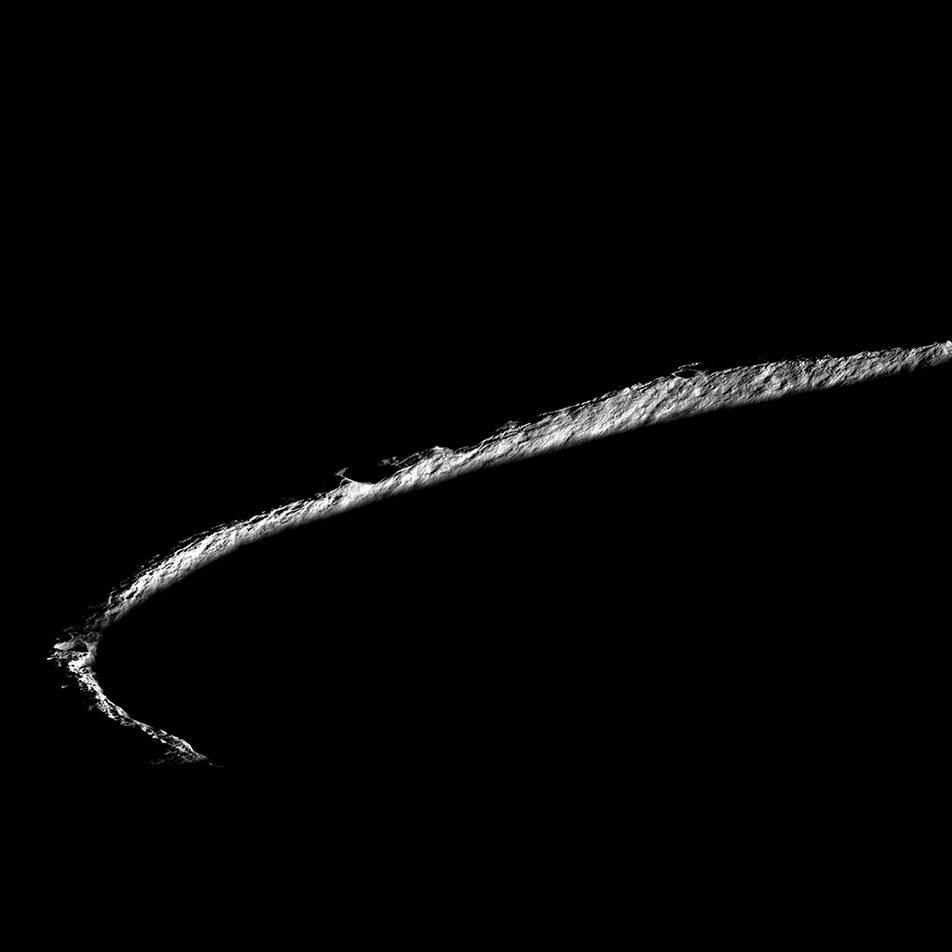
The lunar south pole is the primary target of the Artemis program for reasons that go well beyond ice. The region contains ridges near perpetual sunlight, where solar panels could operate year-round. It offers access to some of the oldest, most geologically interesting terrain on the Moon. But the ice is what makes it feel, to mission planners, like something more than a destination: it makes it feel like a potential base of operations.
Water at the south pole could do two things that matter enormously. First, it could sustain a crew directly: water to drink, water to bathe in, water to grow food in, water to process into breathable oxygen. Second, and perhaps more significant strategically, it could be electrolyzed into hydrogen and oxygen and used as rocket propellant. A lunar south pole facility that could manufacture its own propellant would transform the Moon from a dead-end into a waypoint, reducing the cost and complexity of missions to Mars and beyond by orders of magnitude. The ice isn’t just water. It’s infrastructure.
But the gap between “ice is present” and “ice is useful” is significant, and it is exactly the gap VIPER was supposed to close. Orbital measurements have produced widely varying estimates of ice concentration. Some studies have suggested that up to 20 percent of near-surface material in certain permanently shadowed regions could be water ice by weight. More recent radar analyses, including new work published in 2025 and 2026, point toward much lower figures in most areas: likely only a few percent, with higher concentrations possible in specific, localized deposits. A site with 5 percent water ice by weight requires very different extraction technology, and very different logistics, than a site with 20 percent. The difference between those scenarios is, in engineering terms, the difference between a viable program and a non-starter.
VIPER was the instrument that would have moved those orbital estimates into ground-truth data. Without it, Artemis mission planners are still working, to some extent, from models and inferences. The IM-2 mission, launched by Intuitive Machines in early 2025 as part of NASA’s Commercial Lunar Payload Services program, carried a drill and mass spectrometer to Mons Mouton, a plateau near the south pole with access to nearby permanently shadowed regions. The lander, named Athena, touched down on March 6, 2025. It landed on its side, approximately 250 meters from its intended site, inside a small crater. NASA recovered some data before contact was lost. It was not nothing. But it was also not the comprehensive surface survey the science demands.
What Fills the Gap
The story did not end with the July 2024 cancellation. In February 2025, NASA issued an Announcement for Partnership Proposals, inviting U.S. commercial partners to take on the VIPER mission under a framework that would shift financial risk from the agency to the contractor. The logic was straightforward: if cost growth was what killed the original mission, a commercial structure with different incentives might do better.
On September 19, 2025, NASA selected Blue Origin of Kent, Washington, to carry VIPER to the lunar surface. The task order, designated CS-7 under the CLPS framework, has a potential total value of $190 million. Blue Origin plans to deliver VIPER using its Blue Moon MK1 lander, currently in production, with a landing at the lunar south pole targeted for late 2027. The rover itself remains the same rover: the same instruments, the same science objectives, the same drill. What changed is the delivery model, and with it, who bears the risk of another delay.
The competitive dimension is also sharpening. China’s Chang’E-7 mission, currently targeting a 2026 launch, lists the direct detection of water ice at the lunar south pole as a primary scientific objective. The Chinese lunar program has moved steadily toward the south pole over the past decade, and a successful Chang’E-7 landing would represent the first on-the-ground confirmation of water ice: a scientific first that no amount of orbital data can replicate. The question of who reaches the lunar ice first is no longer purely scientific. It has a competitive shape.
There is something quietly remarkable about the trajectory of this story. A robot built with half a billion dollars of public money to answer a question about ice sat, complete and dormant, on the ground for a year, then found its way onto a new rocket under a new commercial framework. The question it was built to answer is the same question it will try to answer, assuming everything goes to plan by late 2027. The ice, for its part, has been waiting billions of years. It can wait a little longer.
The coldest question in the solar system is also the most urgent one: is there enough to stay?
