

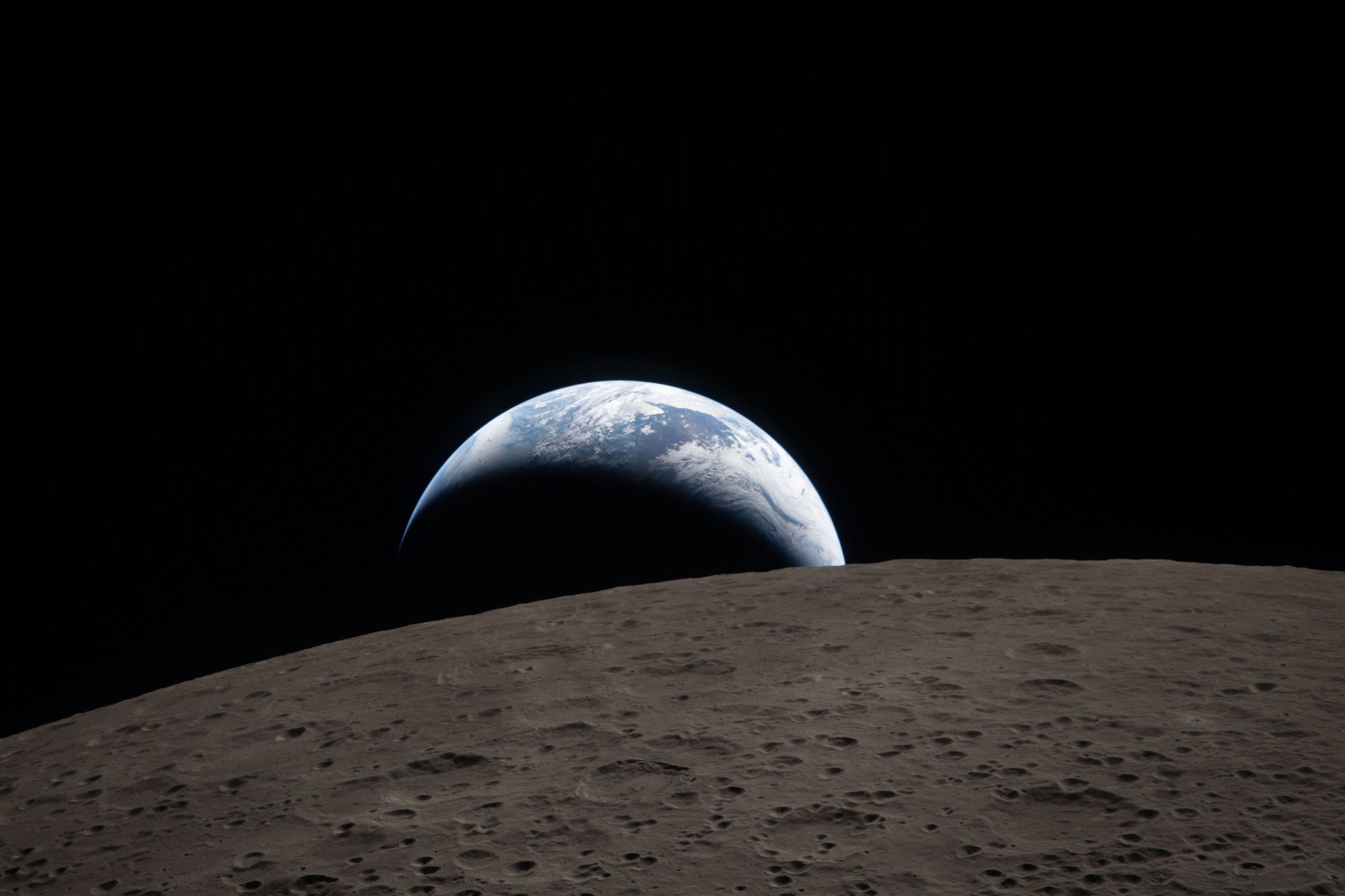
At 6:41 on a Tuesday evening, 252,756 miles from home, four human beings watched the Earth set.
Not a metaphor. The actual Earth: a crescent of blue and white, cloud swirling over Oceania, sliding behind the cratered rim of the Moon’s far side. The ocean they grew up beside. The whole of human civilization, setting. No one alive had seen this view since Apollo 17 placed its crew near the Moon in December 1972. That was 54 years ago. On April 6, 2026, Reid Wiseman, Victor Glover, Christina Koch, and Jeremy Hansen watched it happen in real time, through the windows of Orion, from the far side of the Moon.
The mission
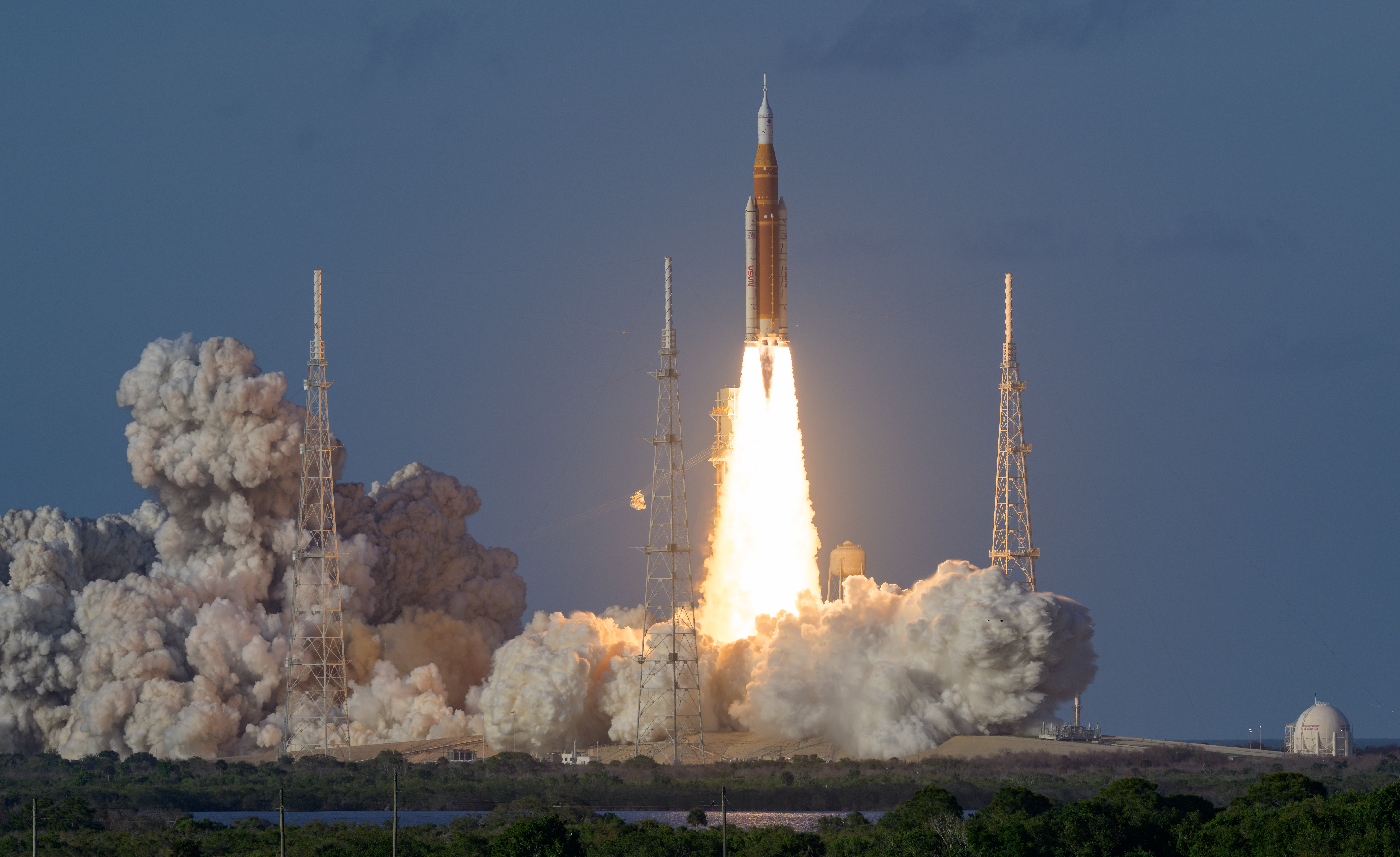
Artemis II launched April 1, 2026, aboard NASA’s Space Launch System from Kennedy Space Center in Florida. Over ten days, the crew traced a 695,081-mile free-return trajectory around the Moon: a path shaped by gravity rather than fuel, the same orbital mechanic that brought Apollo 8 home in 1968. They splashed down in the Pacific Ocean on April 10 at 8:07 p.m. EDT.
Today, at NASA’s Johnson Space Center in Houston, the crew held their first full postflight press conference. Commander Wiseman chose words that landed less like a mission debrief and more like a confession: “Victor, Christina, and Jeremy, we are bonded forever, and no one down here is ever going to know what the four of us just went through. And it was the most special thing that will ever happen in my life.”
Pilot Victor Glover, the first Black astronaut to travel to the Moon’s vicinity, thanked God and could not find adequate language. Mission specialist Christina Koch said she learned, in those ten days, what a crew actually means. Mission specialist Jeremy Hansen, of the Canadian Space Agency, became the first Canadian to travel beyond low Earth orbit.
What this actually was
Artemis II was a test flight. That is the mission classification. NASA used it to validate Orion’s life support in deep space, confirm manual piloting capability, execute the propulsion sequences required to reach and return from the lunar vicinity, and bring four people home safely. All primary objectives were met.
Calling it a test flight, though, understates the scale of what just happened. The 252,756-mile maximum distance the crew reached from Earth is a new human spaceflight record, surpassing Apollo 13’s 1970 mark by 4,111 miles. Apollo 13 reached that distance not by design but by accident, its crew improvising survival with failing systems. Artemis II got there deliberately, and the crew had time to look out the window.
The images they transmitted from the lunar far side are unlike anything in the crewed spaceflight record. Earth, a crescent, sinking behind the Moon’s rim. A solar eclipse observed from 250,000 miles away, the Moon blocking the Sun from a geometry that has no equivalent from Earth’s surface. The ancient, pockmarked geology of the far side in higher resolution than any human eye has seen at that proximity. For anyone who has encountered the cognitive shift astronauts describe when they first see the Earth as a small, whole, fragile object in space (what is sometimes called the Overview Effect), this mission extended the frame. These four people did not just see the whole Earth. They watched it set behind another world.
What comes next
The data from Artemis II now feeds directly into Artemis III, currently targeting 2027, which is designed to land crew near the lunar south pole for the first time in history. Every life support reading, every manual piloting data point, every system performance record from this flight becomes a test case for the hardware that has to work when people actually step off the lander.
The crew will spend weeks in postflight medical evaluations and technical debriefs across NASA centers. Commander Wiseman, before he left the podium today, offered one more thought: “It’s a special thing to be a human, and it’s a special thing to be on planet Earth.” He has now earned the standing to say it.
Somewhere over those ten days, Earth set behind the Moon, and then it rose again, and four people watching through a spacecraft window came to know something about home that the rest of us are still working out how to say.

