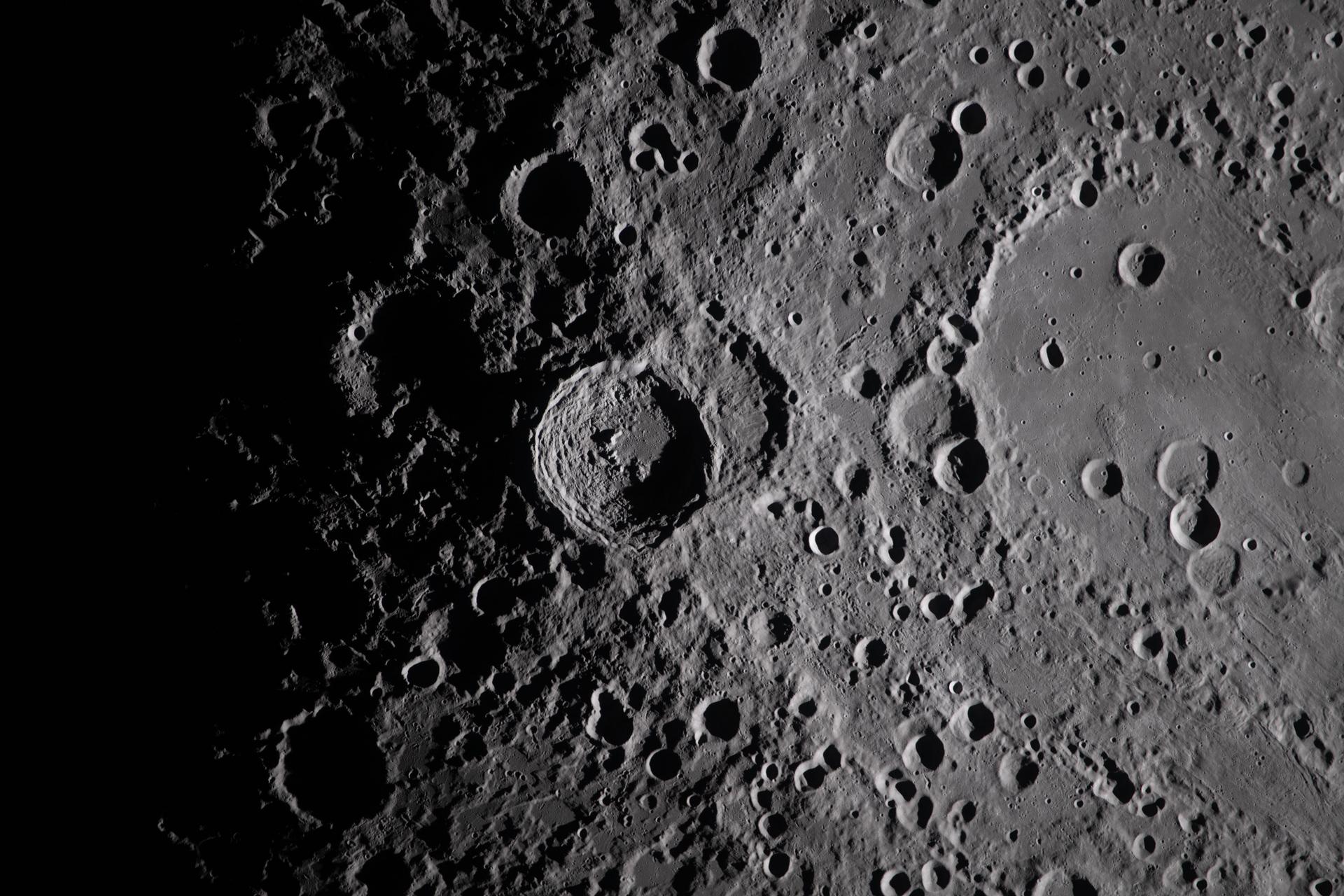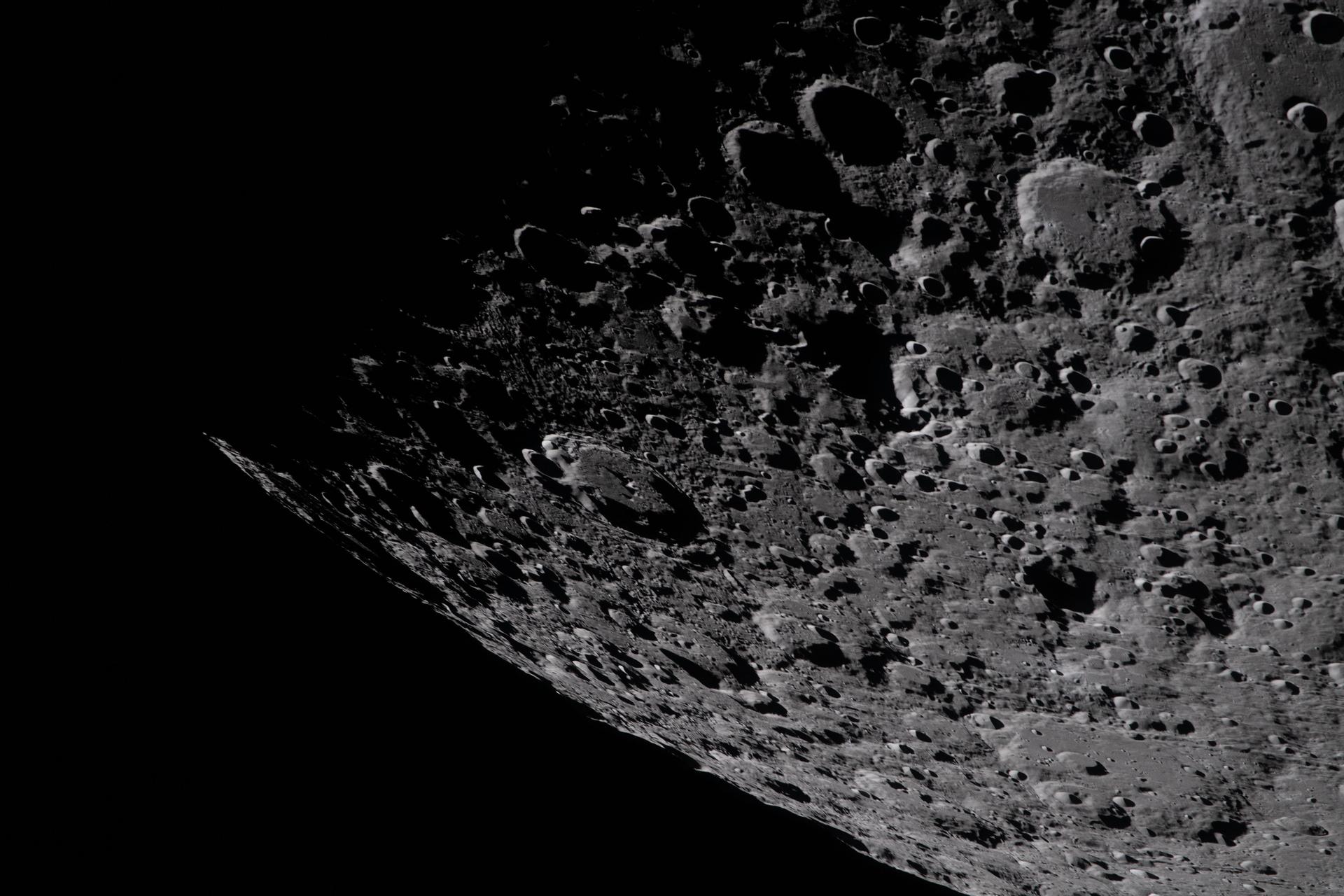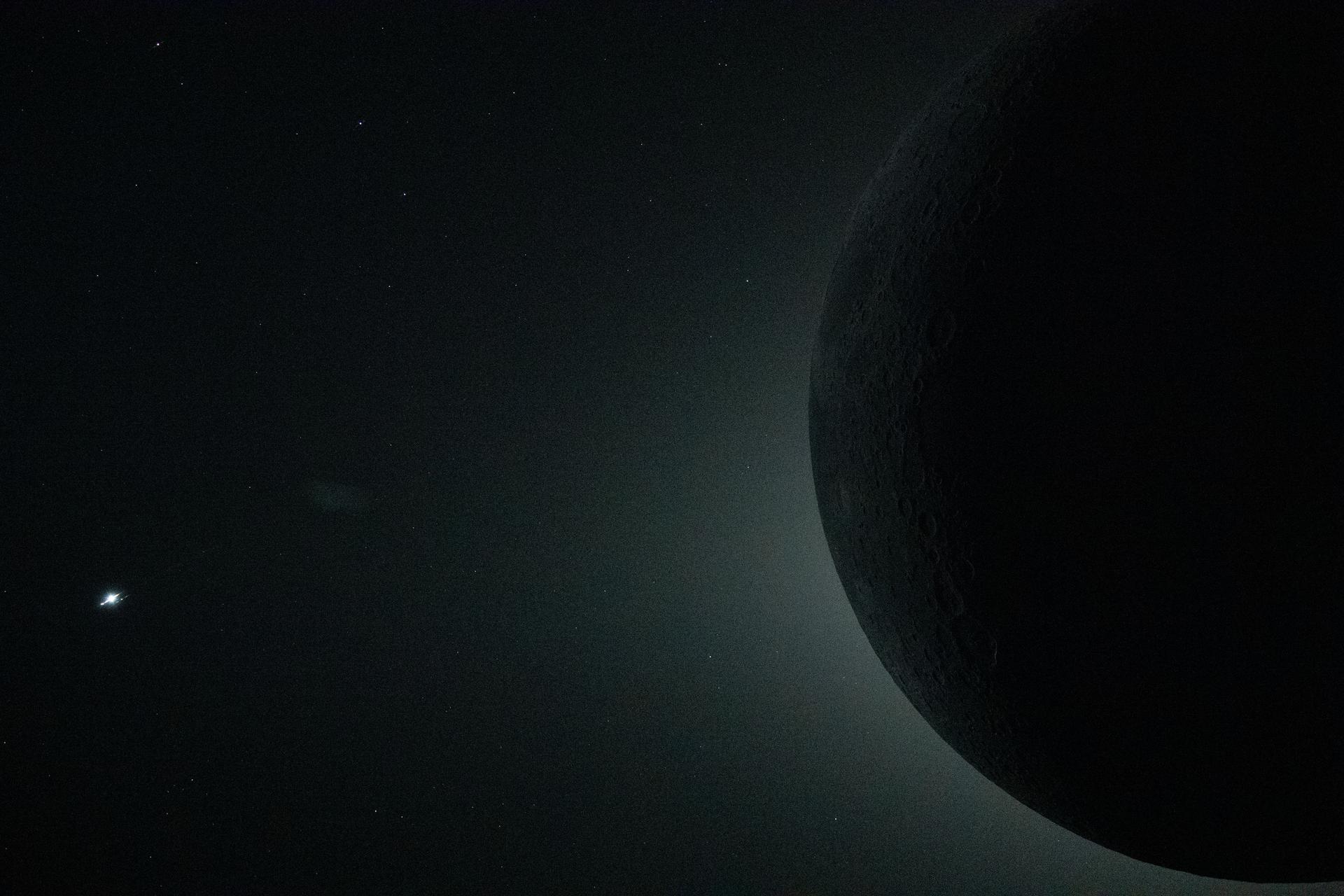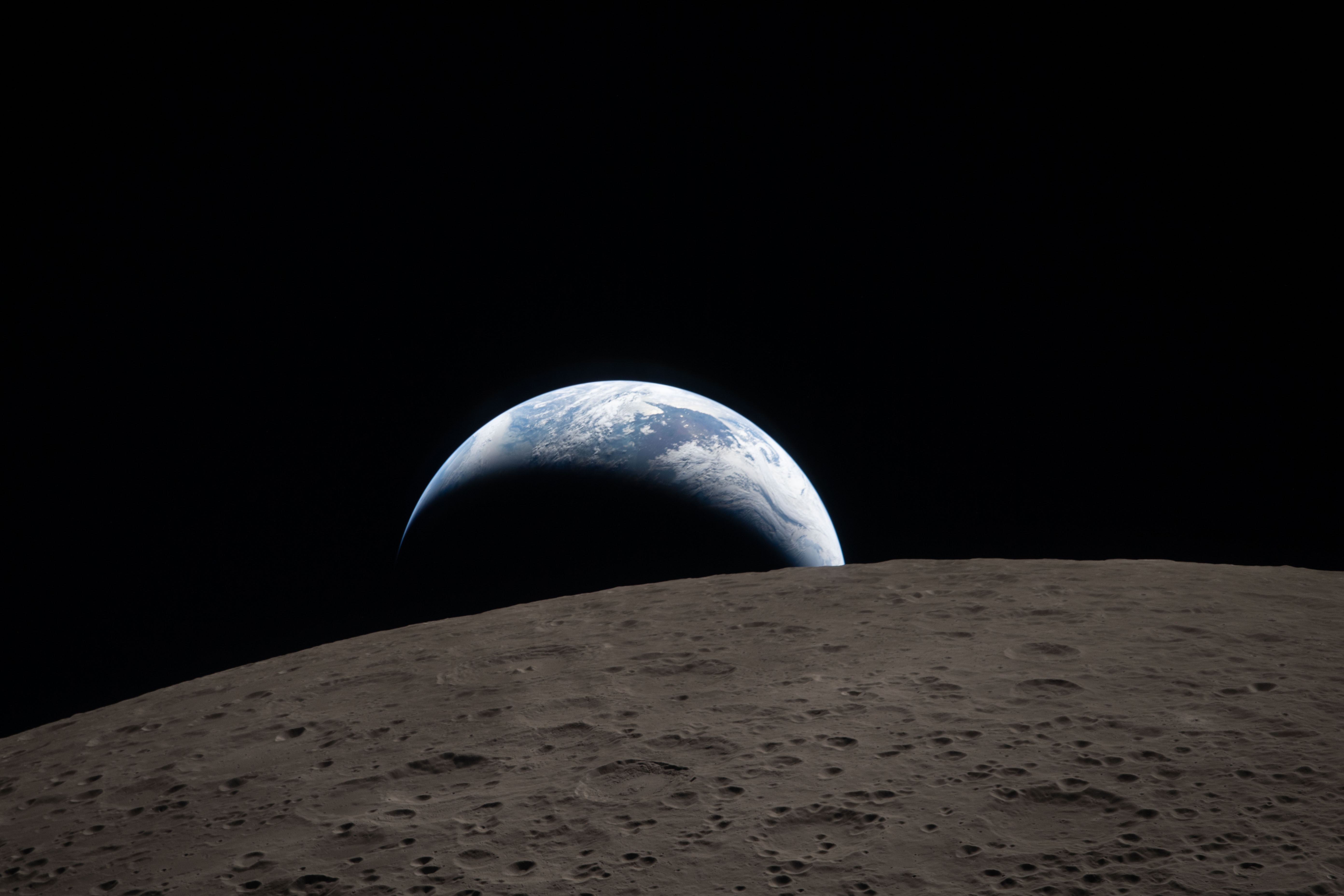
At 7:00 p.m. EDT on April 6, 2026, the Moon was not above the crew of Artemis II. It was beside them, beneath them, everywhere. Through the windows of the Orion spacecraft Integrity, flying just 4,067 miles above the surface, four human beings watched a world they had only ever known as a pale disc in the night sky reveal itself as a place: ridged, cratered, colored, real.
At that altitude, close enough to resolve features the size of a small city, individual mountain ranges came into focus. Crater rims stood in sharp relief against the black of space. The smooth dark plains that Galileo called “seas” four centuries ago spread beneath them in shades of gray and brown that the crew could distinguish with their eyes alone. What followed was a seven-hour observation campaign: the most detailed crewed survey of the lunar surface since Apollo 17 in 1972.
Thirty-Five Windows into Lunar History
The flyby was not a sightseeing pass. NASA scientists had identified roughly 35 geological features for the crew to observe, photograph, and describe in real time to researchers at Mission Control in Houston. Working in rotating pairs, one astronaut at the camera and one on voice, Commander Reid Wiseman, Pilot Victor Glover, Mission Specialist Christina Koch, and Canadian Space Agency astronaut Jeremy Hansen cycled through the target list as the Moon’s terrain scrolled past at 3,139 miles per hour relative to the surface.
The first major target was the Orientale Basin, a nearly 580-mile-wide impact scar straddling the boundary between the Moon’s near and far sides. At 3.8 billion years old, it is the youngest major impact basin on the Moon, and its concentric ring structure still stands in dramatic topographic relief. From orbit, Wiseman and Glover could trace the basin’s rings across hundreds of miles of terrain; a wound so large it reshaped the crust around it when a massive object struck during the Late Heavy Bombardment.
Nearby, Glushko Crater revealed its distinctive white ejecta streaks, extending up to 500 miles from a bowl only 27 miles wide. Those streaks are made of material excavated from deep beneath the surface, rocks that have not been exposed to billions of years of space weathering and still reflect sunlight at their original brightness. For geologists, each streak is essentially a core sample laid out across the landscape.
The crew spent considerable time observing the lunar maria, the vast dark plains that dominate the Moon’s near side. These are not seas but ancient lava flows, erupted between 1.2 and 3.8 billion years ago, filling impact basins with basalt rich in iron and titanium. From Integrity’s windows, the crew reported something orbital cameras had never fully captured: subtle color variation across the surface. Shades of brown and blue became visible, each hue a signature of different mineral composition and eruption age. Scientists at the Johnson Space Center listened as the crew called out every shift in tone and texture, building a color record that no satellite sensor replicates the way the human eye perceives it.
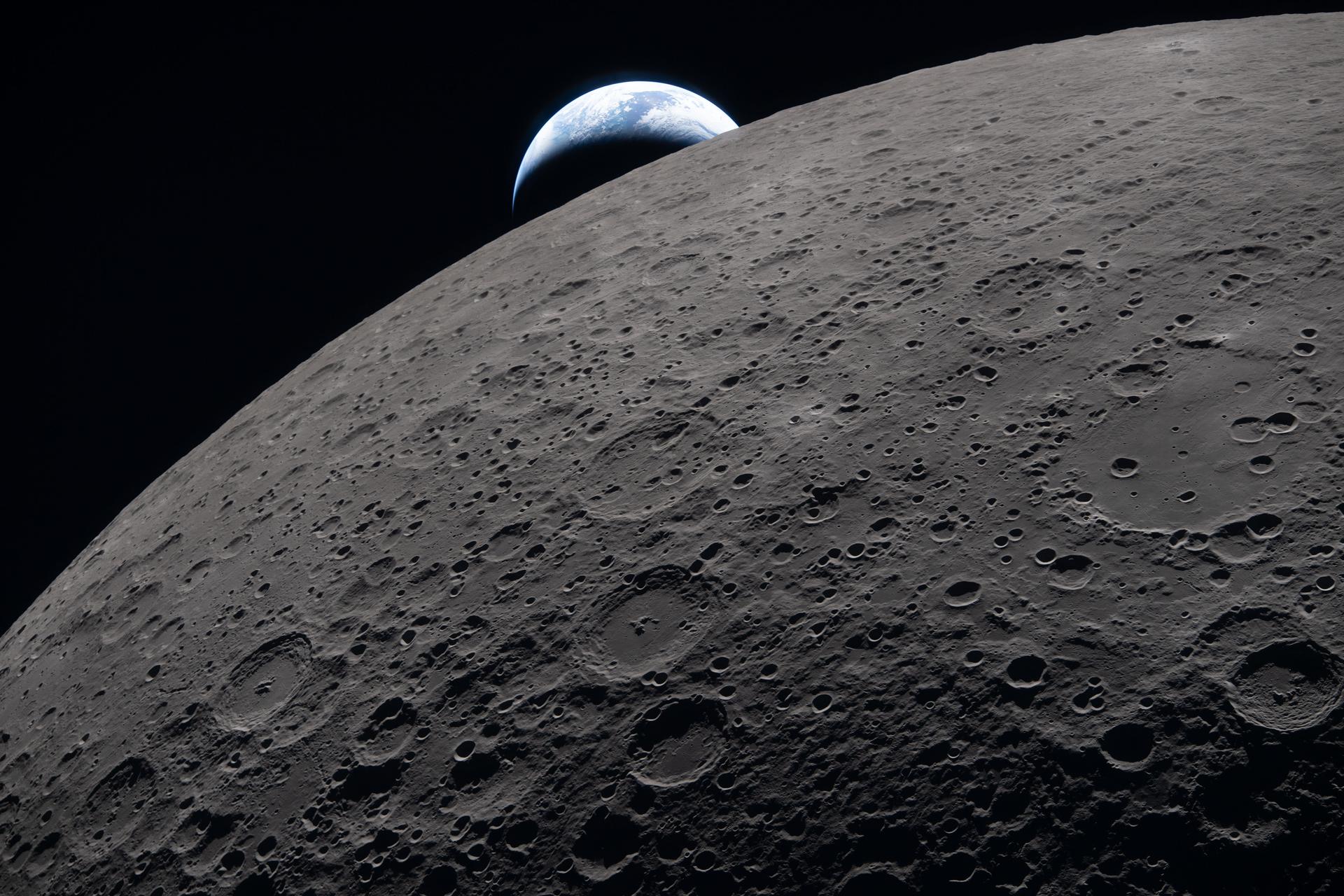
The pale lunar highlands surrounding the maria told a different story. Composed primarily of anorthosite, a calcium-rich rock that crystallized from the Moon’s original magma ocean, the highlands are the oldest visible surface on the Moon. Their brightness and roughness contrast sharply with the dark, smooth maria. The crew observed the Sea of Tranquility, where Apollo 11 landed in 1969, and the Taurus-Littrow mountains, where Apollo 17 collected the last lunar samples in 1972. Within Taurus-Littrow valley, the Lee-Lincoln Scarp cuts across the terrain: a lobate thrust fault that tells geologists the Moon is still slowly contracting, still tectonically alive in its quiet way.
On the near side, the crew also trained their cameras on Reiner Gamma, one of the Moon’s most enigmatic features: a bright, sinuous swirl of unknown origin. Reiner Gamma is a future target for NASA’s Commercial Lunar Payload Services program, and the crew’s visual observations will help refine what scientists expect to find when a robotic lander arrives.
Far Side, Eclipse, and Two New Names
As Integrity crossed behind the Moon, the crew lost radio contact with Earth for 40 minutes. Just before the signal dropped, Glover transmitted a message: “As we prepare to go out of radio communication, we’re still going to feel your love from Earth. And to all of you down there on Earth and around Earth, we love you, from the Moon. We will see you on the other side.”
The far side is a different world. Nearly devoid of maria, it is all highlands and craters layered upon craters, a record of bombardment stretching back to the earliest days of the solar system. The absence of ancient lava flows means the far side’s surface is older and more heavily cratered than anything visible from Earth. The crew photographed the Hertzsprung Basin, nearly 400 miles wide, and Vavilov Crater perched on its rim, whose sharp walls and fresh appearance provide clues about the energy of the impact that formed it. They also observed Tsiolkovsky Crater, a far-side landmark first glimpsed by the Apollo 8 crew in 1968, making Artemis II only the second crewed mission to see it directly.
Among the unnamed features they documented, the crew proposed designations for two craters. The first, northwest of the Orientale Basin, they called “Integrity,” after their spacecraft. The second, to its northeast, they named “Carroll,” in honor of Commander Wiseman’s late wife. If ratified by the International Astronomical Union, these will be the first craters named by astronauts observing them in person since the Apollo era.
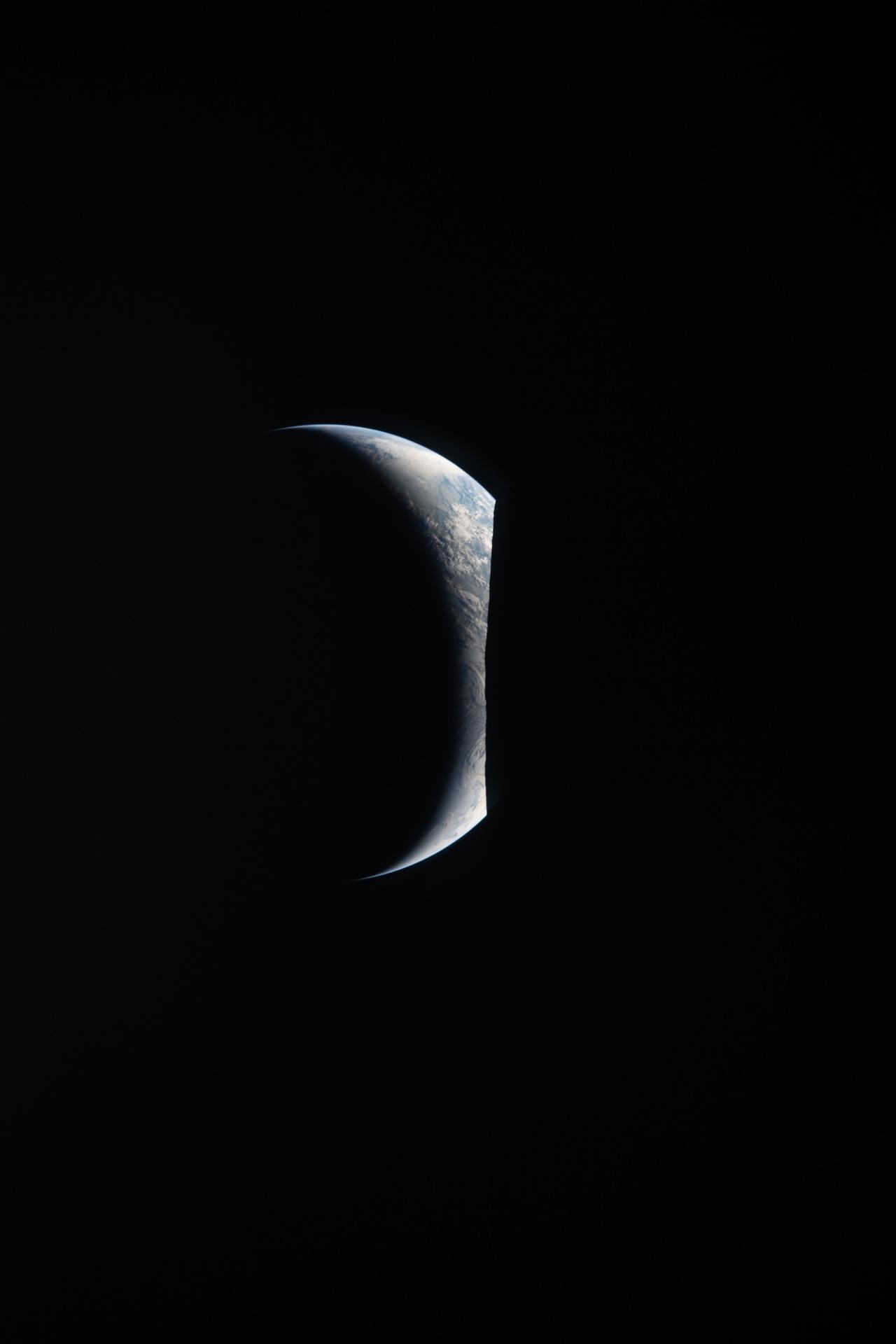
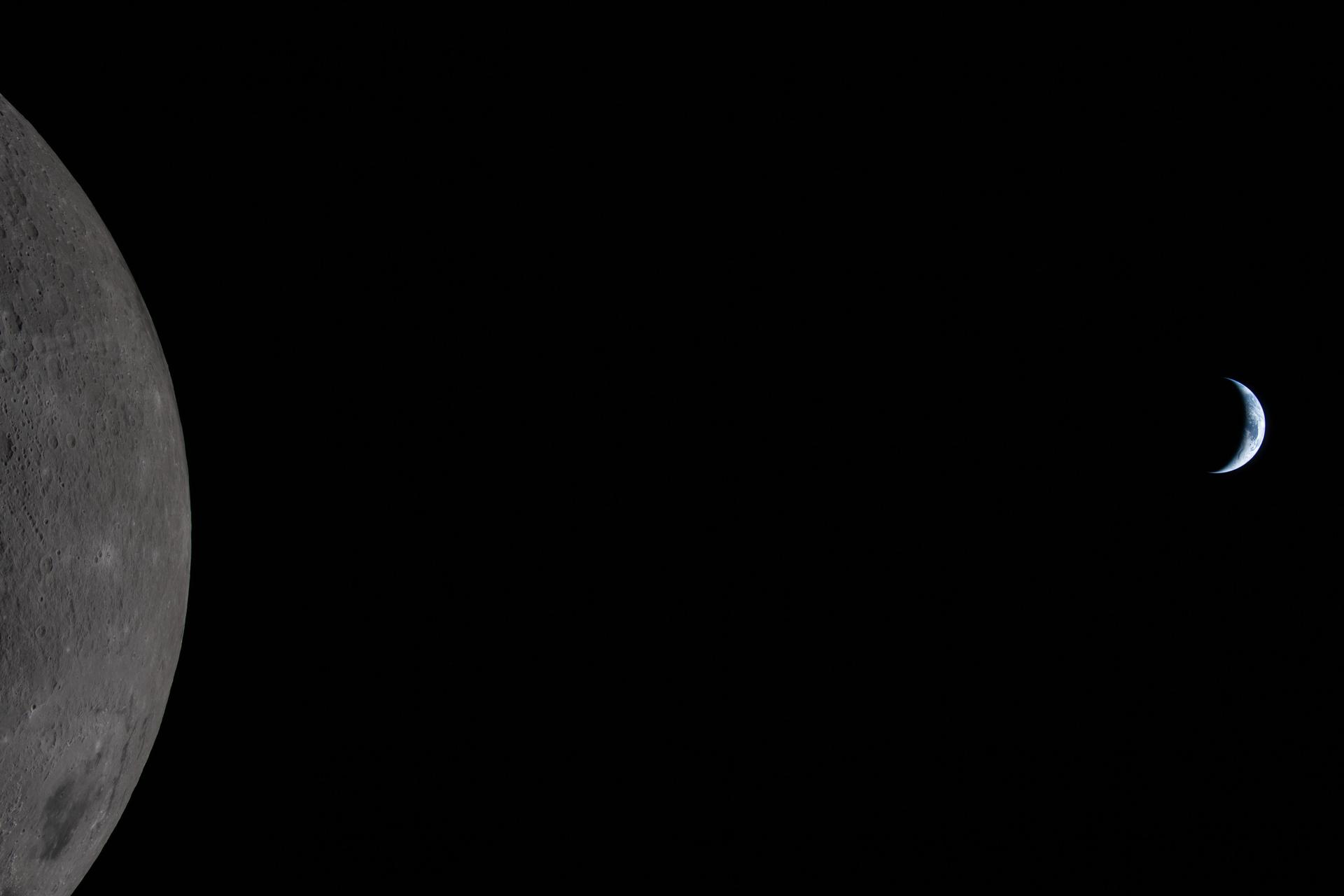
As Integrity emerged from behind the Moon, the crew witnessed Earthrise: our planet climbing over the far-side horizon. Later, at 6:41 p.m. EDT, they watched Earthset, the blue world dropping below the Moon’s curved limb. The photograph they captured of that moment, a muted blue sphere trailing bright white clouds as it slipped behind a gray, cratered horizon, is already one of the defining images of this decade’s space program.
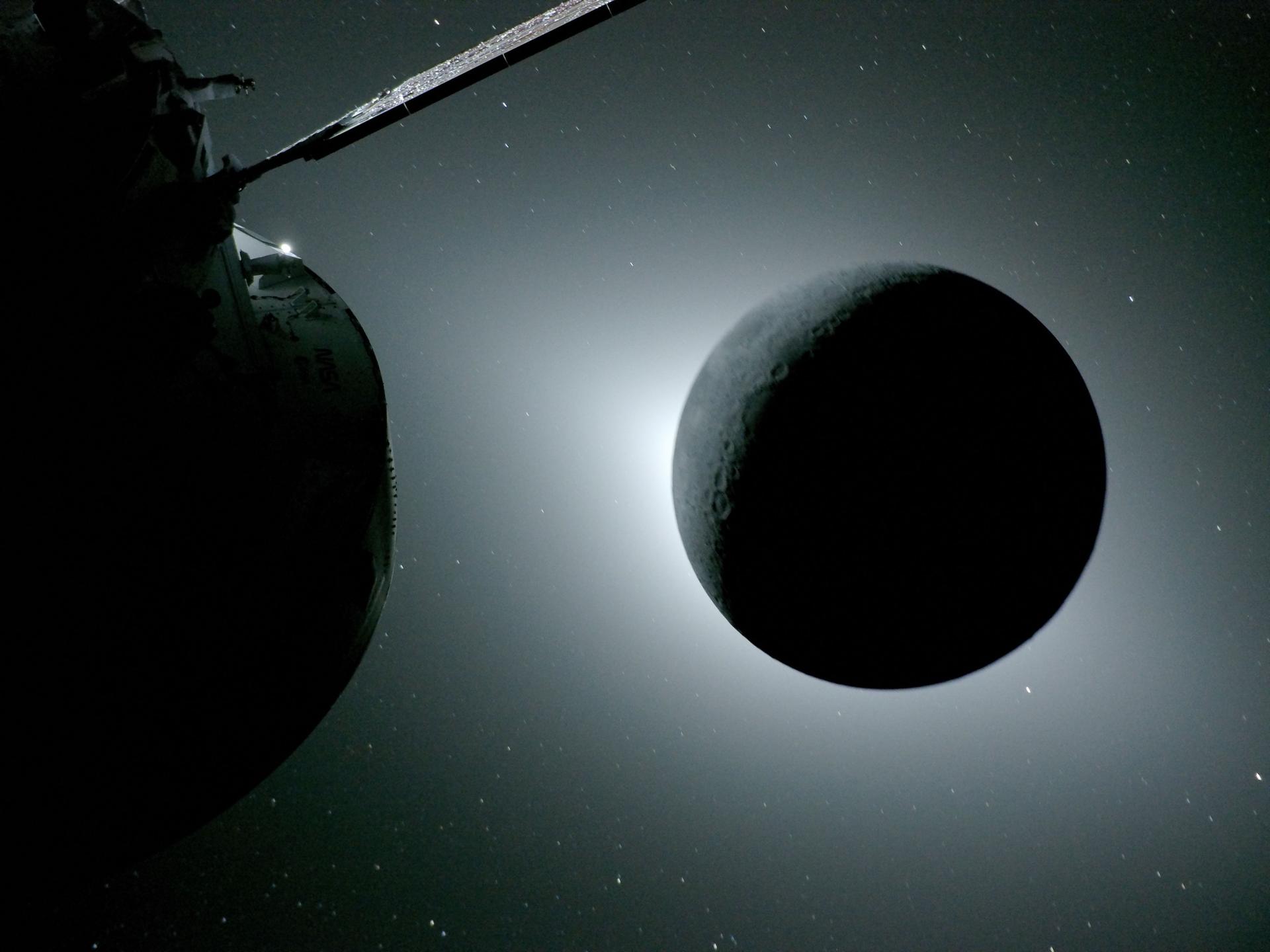
Then the geometry aligned for something unprecedented. For nearly one hour, the Moon drifted between Integrity and the Sun, and the crew became the first people in history to witness a solar eclipse from lunar orbit. They watched the Sun disappear behind a mostly darkened Moon and studied the solar corona, the Sun’s outermost atmosphere, as it glowed in a thin luminous ring around the lunar edge. From this vantage, with no atmosphere to scatter light, the corona’s faintest structures were visible in a way that ground-based observatories simply cannot achieve.
During the eclipse, with the surface cast in shadow, the crew spotted six meteoroid impact flashes: brief bursts of light from small objects striking the Moon at hypervelocity. Apollo 17 astronaut Harrison Schmitt reported similar flashes in 1972. For the Artemis program, these observations help map the rate and distribution of micrometeoroid bombardment, data that matters directly to anyone planning to build on or walk across the surface.
Reconnaissance for a Return
Over the course of the flyby, the crew reached 252,756 miles from Earth, surpassing the distance record held by Apollo 13 since 1970 by more than 4,100 miles. Hansen marked the moment from the cabin of Integrity: “As we surpass the furthest distance humans have ever traveled from planet Earth, we do so in honoring the extraordinary efforts and feats of our predecessors in human space exploration.”
But the record was incidental. The real purpose was what they saw, and what it means for what comes next.
During the flyby, the crew caught a brief view of the lunar south pole, where NASA has identified nine candidate regions for future crewed landings. Artemis III, now scheduled for 2027, has been restructured as an orbital test: rendezvous and docking exercises with SpaceX’s Starship HLS and Blue Origin’s Blue Moon lander in low Earth orbit, plus testing of the new Axiom Extravehicular Mobility Unit spacesuit. The first crewed lunar landing of the Artemis program is now planned for Artemis IV, targeted for 2028.
That timeline makes Artemis II more than a test flight. It was a scouting mission. The 35 observation sites were chosen not only for their scientific interest but for their relevance to future landing site evaluation. The crew’s color data, their reports on surface texture, their photographs of terrain that satellites have mapped but never viewed through human eyes: all of it feeds the engineering models that will determine where the next crew touches down.
The maria the crew observed are the same smooth plains that Galileo charted four centuries ago, the same terrain that Apollo 15 explored on foot in 1971. One of them, Mare Imbrium, gave this publication its name. These ancient lava fields are not relics. They are candidates for future habitation: flat, accessible, geologically understood. What the Artemis II crew saw through their windows was a reconnaissance of a place that is, slowly but measurably, becoming somewhere we intend to stay.
The crew will splash down off the coast of San Diego on April 10. In the weeks that follow, they will sit with the lunar science team and walk through every photograph, every voice description, every observation. The cognitive shift that astronauts describe after seeing Earth from deep space is well documented. But the shift that comes from studying another world with your own eyes, close enough to see its colors and name its craters, is something rarer. It belongs now to exactly four people.
Four people flew to the Moon and looked down. They saw colors that cameras had missed, craters that had no names, and a landscape that is, quietly, becoming ours.
Gallery: Artemis II — The Moon Up Close
Over seven hours above the Moon, the crew of Orion Integrity photographed lunar geology, Earth from beyond the Moon’s limb, and a solar eclipse observed from a vantage no human had held before. A selection from the images they sent home.