

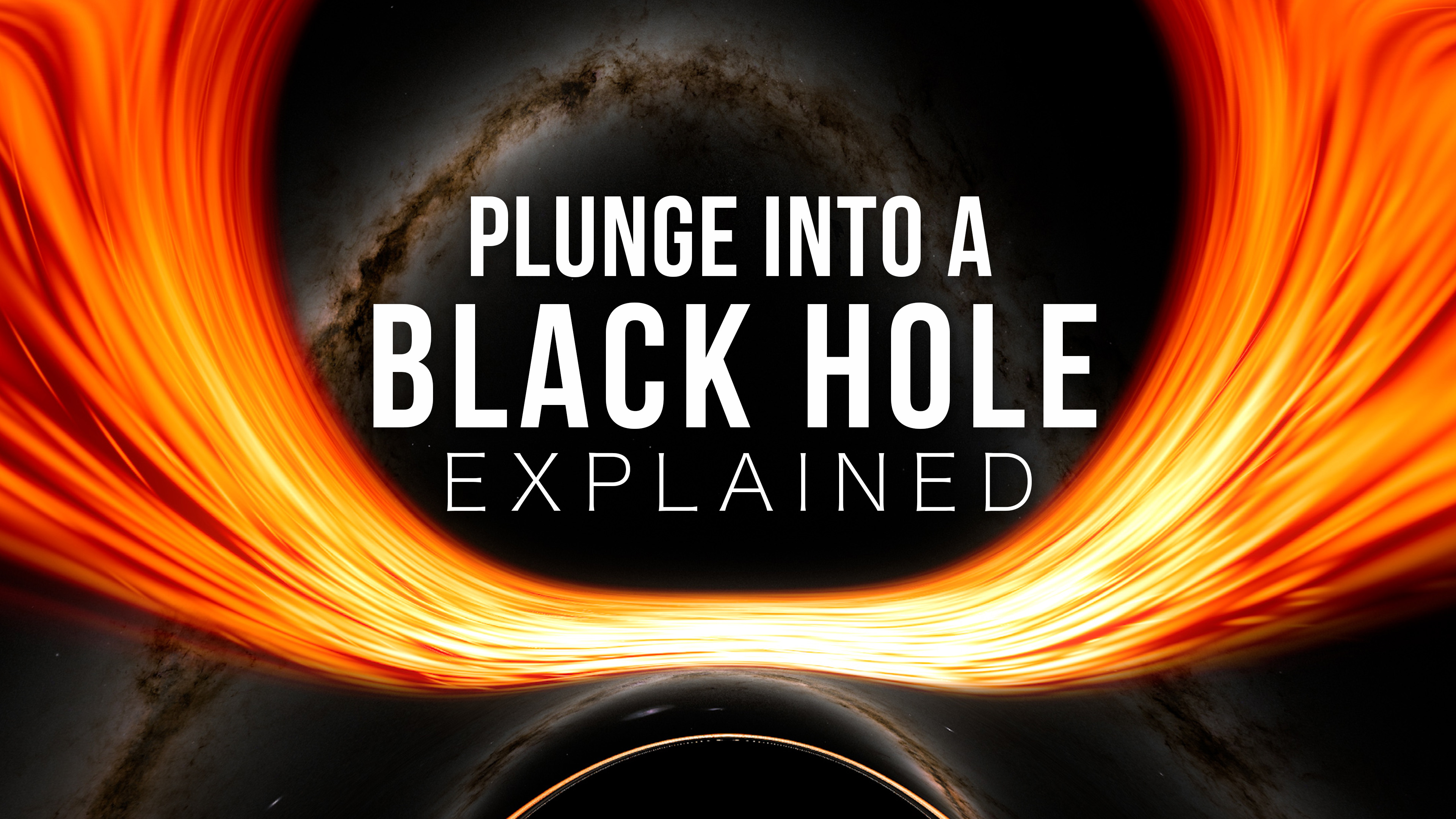
Every equation that describes a black hole has a mirror. Reverse the direction of time, and the mathematics of general relativity gives you something astonishing: a region of spacetime where nothing can enter, where matter and light can only pour outward, where the arrow of cause and effect flips on its axis. Physicists call it a white hole. We have never found one. And yet the same laws that predicted black holes decades before we photographed them insist that white holes are just as valid.
That tension, between a universe that permits white holes in theory and one that seems to forbid them in practice, has haunted physics for over half a century. Now, a wave of new research is suggesting something extraordinary: white holes may not just be mathematical ghosts. They may be the final chapter in every black hole’s life story.
What Is a White Hole?
A white hole is, in the simplest terms, a black hole played in reverse. Where a black hole’s event horizon is a boundary that nothing can escape, a white hole’s event horizon is a boundary that nothing can cross inward. Matter, energy, and light can only flow out. Think of it as a cosmic fountain: everything inside is expelled, and nothing from the outside universe can get back in.
This is not science fiction. White holes emerge naturally from Einstein’s field equations of general relativity. The mathematics is time-symmetric, meaning that for every solution describing a black hole swallowing matter, there is an equally valid solution describing a white hole ejecting it. The Schwarzschild metric, the simplest description of a non-rotating black hole published in 1916, contains both solutions. One was celebrated. The other was quietly set aside.
The reason? Thermodynamics. The second law states that entropy, the measure of disorder in a system, must always increase. A black hole forms when a massive star collapses, a process that increases entropy enormously. Running that process in reverse to produce a white hole would require entropy to decrease, and the second law does not allow that. So while general relativity is perfectly comfortable with white holes, thermodynamics gives the concept what physicists have long considered a hard no.
For decades, that seemed like the end of the conversation.
The Quantum Bounce
In 2014, theoretical physicist Carlo Rovelli and collaborators at Aix-Marseille University proposed something that reopened the question entirely. In a pair of landmark papers, Rovelli and Francesca Vidotto introduced the concept of the Planck star, while Rovelli and Hal Haggard worked out the tunneling mechanism. Their shared framework, built on loop quantum gravity, suggested that black holes do not collapse to a point of infinite density. Instead, they bounce.
Loop quantum gravity is a leading approach to unifying general relativity with quantum mechanics. Its central insight is that spacetime itself is not smooth and continuous but woven from discrete, indivisible units, tiny loops of gravitational field at the Planck scale (roughly 10−35 meters). You cannot subdivide space below this limit. It is, in a sense, the pixel resolution of reality.
Rovelli and Vidotto calculated that when a collapsing star compresses matter to this fundamental limit, the loops resist further compression. Quantum pressure halts the collapse and produces an outward “bounce.” The object that emerges on the other side of that bounce is a white hole. They called the maximally compressed state between the two phases a Planck star. Haggard and Rovelli then demonstrated that a black hole can quantum-tunnel into a white hole, a process they described as “black hole fireworks.”
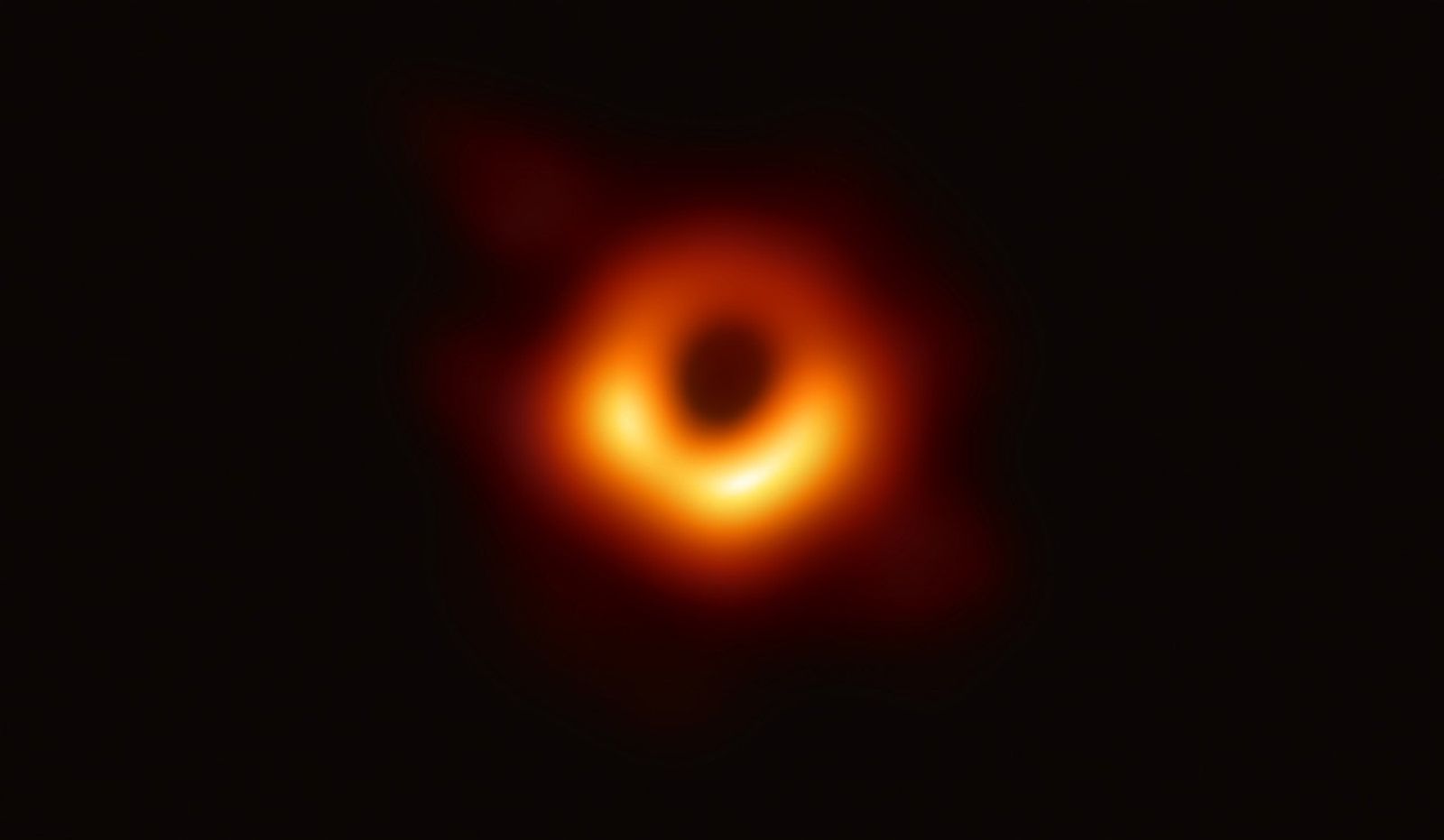
Here is the remarkable part: the bounce itself would be almost instantaneous from the perspective of the collapsing matter, perhaps a fraction of a second in its own proper time. But because of the extreme gravitational time dilation near the event horizon, an outside observer would perceive the process as taking an extraordinarily long time, potentially longer than the current age of the universe. A black hole, from this perspective, is not a permanent object. It is a star in the process of bouncing, frozen in slow motion by its own gravity.
The implications are profound. If Rovelli and his collaborators are right, every black hole will eventually become a white hole. The information that fell in, the source of the infamous black hole information paradox, would eventually come back out. Nothing is permanently lost. The universe, at the deepest level, keeps its receipts.
White Holes vs Black Holes
To understand what makes white holes so strange, it helps to set them side by side with their better-known counterparts.
A black hole pulls. Its gravity is so intense that once you cross the event horizon, every possible path through spacetime leads inward, toward the singularity. Light, matter, information: everything goes in, nothing comes out.
A white hole pushes. Inside its event horizon, every possible path leads outward. Matter, light, and information can only leave. Nothing from the outside universe can enter. The interior of a white hole is completely sealed off from the universe’s past; no external event can ever influence what happens inside.
Black holes are attractors. White holes are sources. One is a cosmic drain; the other is a cosmic spring. And while we have overwhelming observational evidence for black holes (gravitational waves, the Event Horizon Telescope’s direct images, decades of X-ray binary observations), no one has ever detected a white hole. Not a candidate. Not a signal. Not a hint.
That absence is itself informative. It tells us that if white holes exist, they are either vanishingly rare, extremely small, or hiding in plain sight disguised as something else entirely.
Dark Matter and Planck-Mass Remnants
In 2018, Rovelli and colleague Francesca Vidotto pushed the idea further. In a paper titled “Small black/white hole stability and dark matter,” they argued that the expected lifetime of white holes formed as remnants of evaporated primordial black holes is consistent with their survival since the early universe.
The proposal works like this: primordial black holes, formed in the extreme densities of the first moments after the Big Bang, would have been small enough to evaporate via Hawking radiation over cosmic timescales. As they shrank to the Planck mass (roughly 22 micrograms), the quantum bounce would convert them into tiny white holes. These Planck-mass white holes, Rovelli and Vidotto argued, could be stable, protected by a quantum superposition of black and white hole geometries that loop quantum gravity predicts.
And here is where the idea becomes truly provocative: these remnants could be a component of dark matter. They would be nearly invisible, interacting with ordinary matter only through gravity, precisely the behaviour dark matter exhibits. They would have been produced in the early universe in potentially vast quantities. And they would be stable enough to persist for 13.8 billion years.
It is a speculative hypothesis, and it remains unproven. But it offers something rare in dark matter research: a candidate that arises naturally from quantum gravity, without requiring new particles or forces beyond what the theory already predicts.
New Evidence: Singularities as Beginnings
In March 2025, a study published in Physical Review Letters by Dr. Steffen Gielen of the University of Sheffield and Lucía Menéndez-Pidal of Complutense University of Madrid added a new dimension to the white hole picture. Working within a framework called unimodular gravity, a modification of general relativity, they demonstrated that black hole singularities need not be endpoints at all.
Their calculations show that quantum mechanics replaces the classical singularity with a region of large quantum fluctuations, tiny, temporary changes in the energy of space, where space and time do not end. Instead, they transition into a new phase: a white hole. The singularity, traditionally imagined as the final full stop of a collapsing star, becomes a semicolon. Space and time continue on the other side.
“A white hole could be where time begins,” the researchers proposed. If their framework holds, the interior of every black hole may contain not a point of destruction but a gateway to a region of spacetime where the clock starts ticking forward again.
Do White Holes Exist? The Search Ahead
As of 2026, no white hole has been observed. The question is no longer whether the mathematics permits them (it does, unambiguously) but whether nature makes use of the mathematics.
The search is shifting from theory to observation. In early 2025, researchers published a computational framework for identifying potential white hole signatures in gravitational wave data. If a black-to-white-hole transition produces a detectable signal, observatories like LIGO, Virgo, and the upcoming LISA space antenna could, in principle, catch it. The signal would be unlike anything produced by merging black holes or neutron stars: a burst from a source that appears to be expelling matter from a region where no matter should exist.
Other detection strategies focus on high-energy cosmic rays. If Planck-mass white holes occasionally decay or interact, they might produce characteristic gamma-ray signatures detectable by instruments like the Fermi Gamma-ray Space Telescope.
None of these searches has produced a positive result yet. But the tools are sharpening, and the theoretical predictions are becoming precise enough to test. White holes are crossing the boundary from pure thought experiment to falsifiable science.
The Deepest Mirror
What makes white holes so compelling is not just what they would be, but what they would mean. If black holes become white holes, then the universe recycles everything. Information is never destroyed. Singularities are not endings but transitions. The second law of thermodynamics, that iron law of increasing disorder, would not be violated but satisfied on a timescale so vast it dwarfs the current age of the cosmos.
And perhaps most intriguingly, the connection between white holes and the Big Bang has not gone unnoticed. Our universe, after all, appeared to spring from a singularity, expanding outward in all directions, with nothing able to re-enter the initial state. That sounds, to more than a few physicists, like the description of an extraordinarily large white hole. Carlo Rovelli himself has mused that the Big Bang may have been a white hole transition: the bounce of a previous universe’s collapsed star, re-emerging on the other side of the equations that govern cosmic evolution.
It is an idea at the frontier of what can be tested. But it carries a message that resonates far beyond the mathematics.
Somewhere in the universe, a black hole that swallowed a star ten billion years ago may be approaching the moment when it exhales, returning everything it took to a cosmos that had long since forgotten it was owed.

