

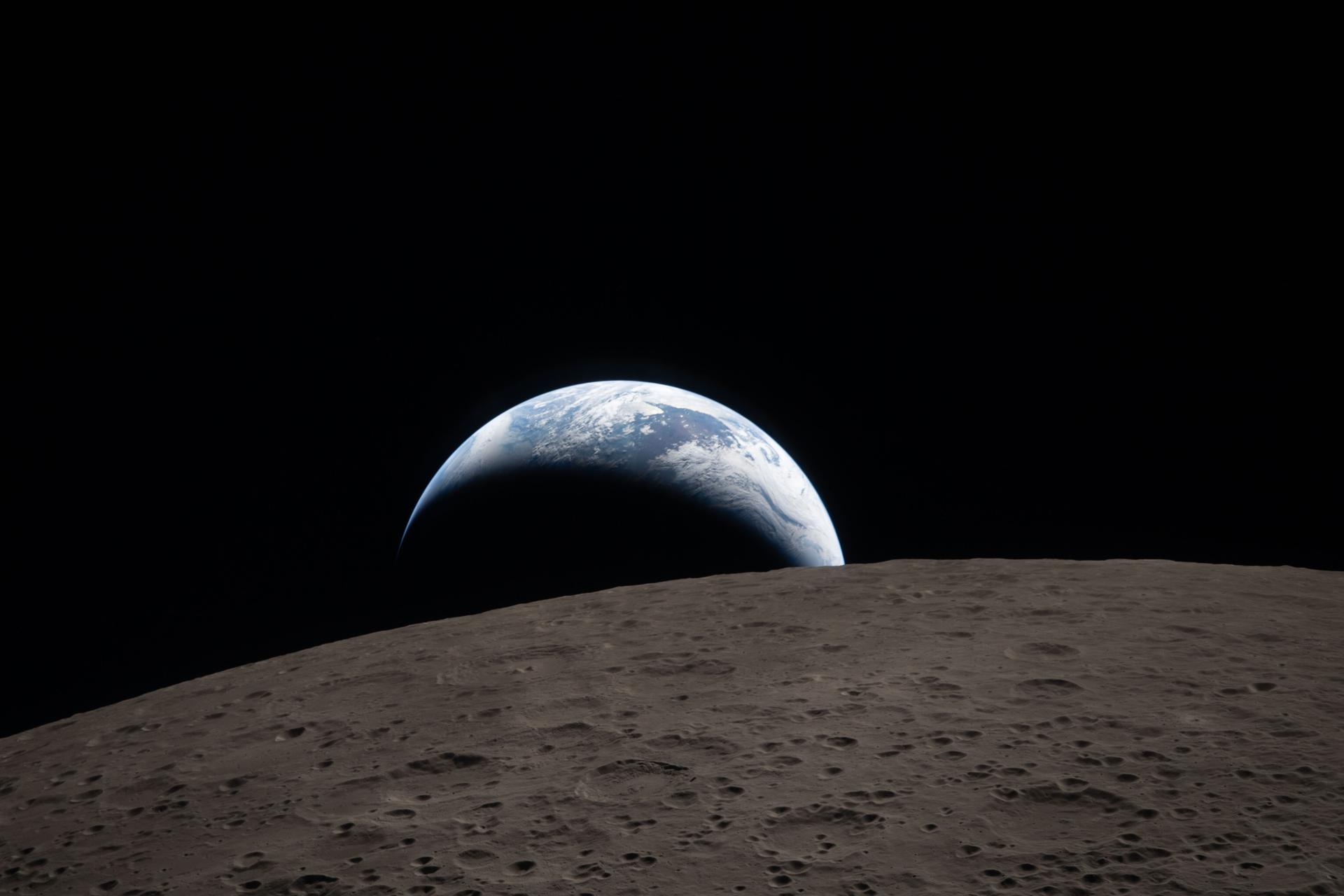
You are looking at the Earth disappearing behind the Moon. Not a simulation, not a render, not an artist’s interpretation. Four human beings, farther from home than anyone has ever been, watched our planet slip below the lunar horizon and captured this photograph through the window of their spacecraft. They called the moment “Earthset.”
The last time a human crew saw the Moon this close was December 1972. For more than fifty years, every photograph of the lunar far side came from robotic probes. On April 6, 2026, that changed. NASA astronauts Reid Wiseman, Victor Glover, and Christina Koch, along with Canadian Space Agency astronaut Jeremy Hansen, completed a seven-hour flyby that took them around the far side, through a solar eclipse, and past a distance record that had stood since Apollo 13.
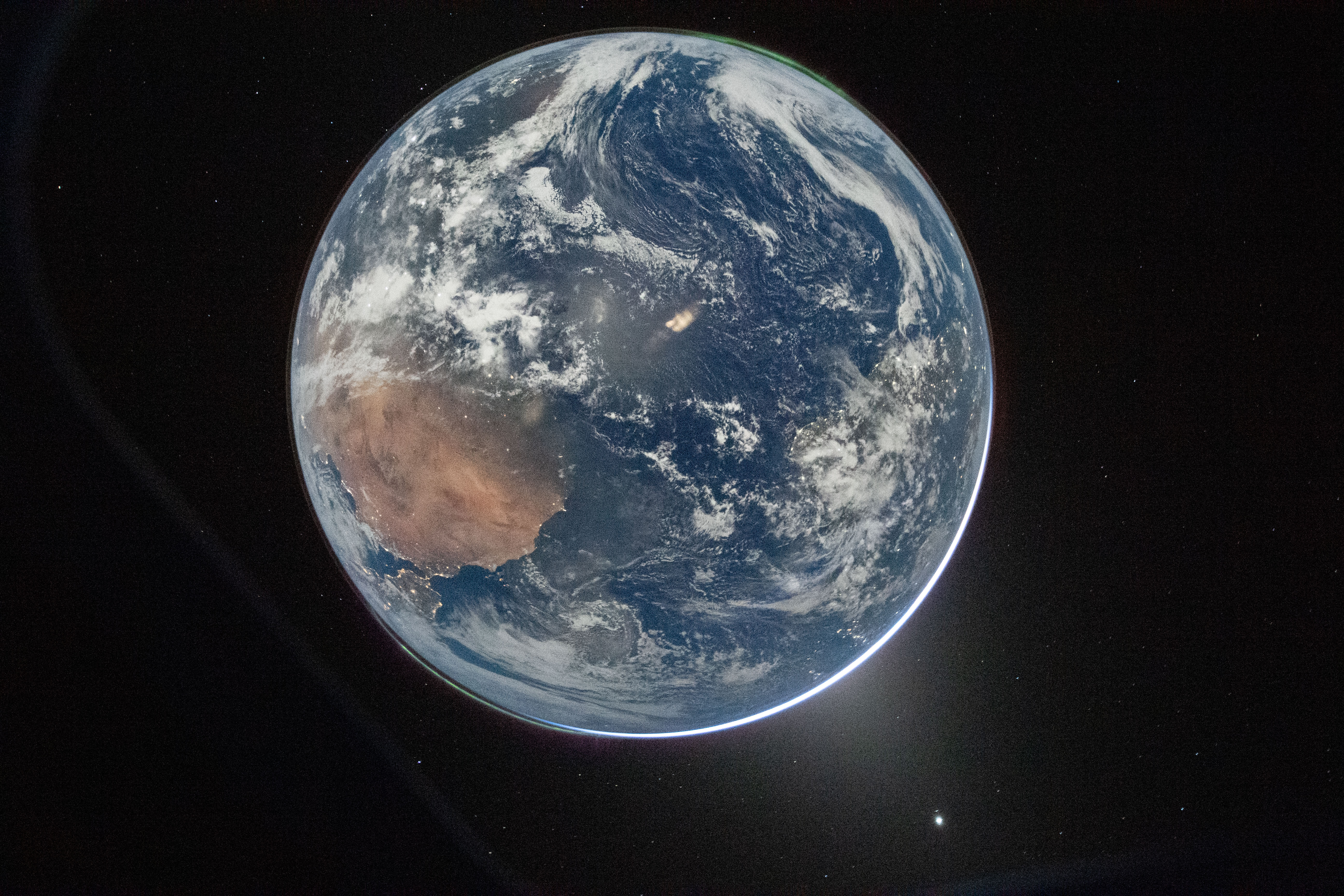
What They Saw
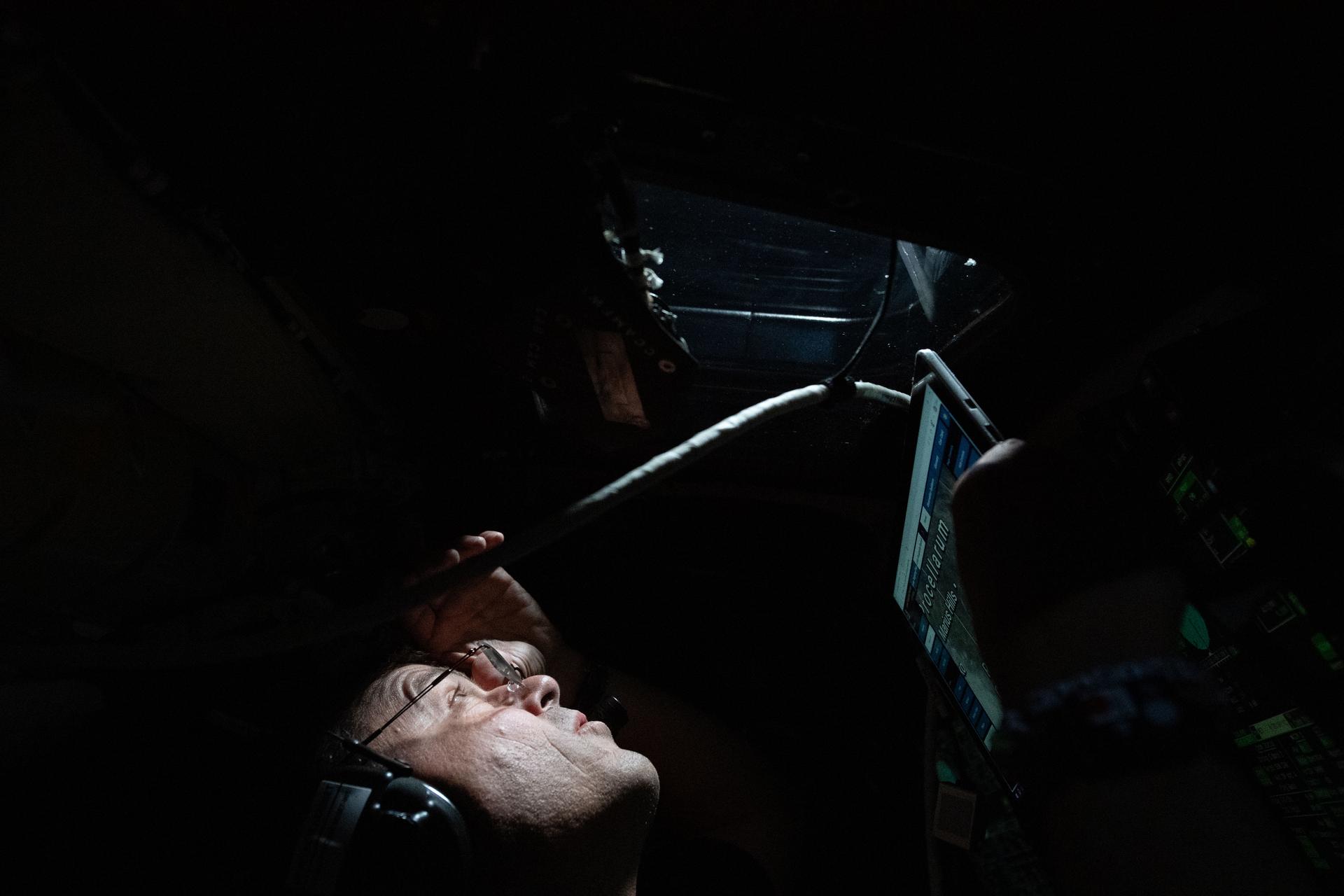
Working in two shifts across roughly five hours, the crew took approximately 10,000 photographs. They captured terrain that no human eye had ever observed directly: sprawling impact craters, ancient lava flows, surface cracks and ridges that trace the Moon’s slow evolution over billions of years.
Among their 30 science targets was the Orientale basin, a nearly 600-mile-wide crater that straddles the boundary between the Moon’s near and far sides. It is the largest and youngest of the great impact craters formed during the Late Heavy Bombardment, a prolonged asteroid blizzard that pummeled the Moon roughly four billion years ago. This was the first time any human being looked down at it.
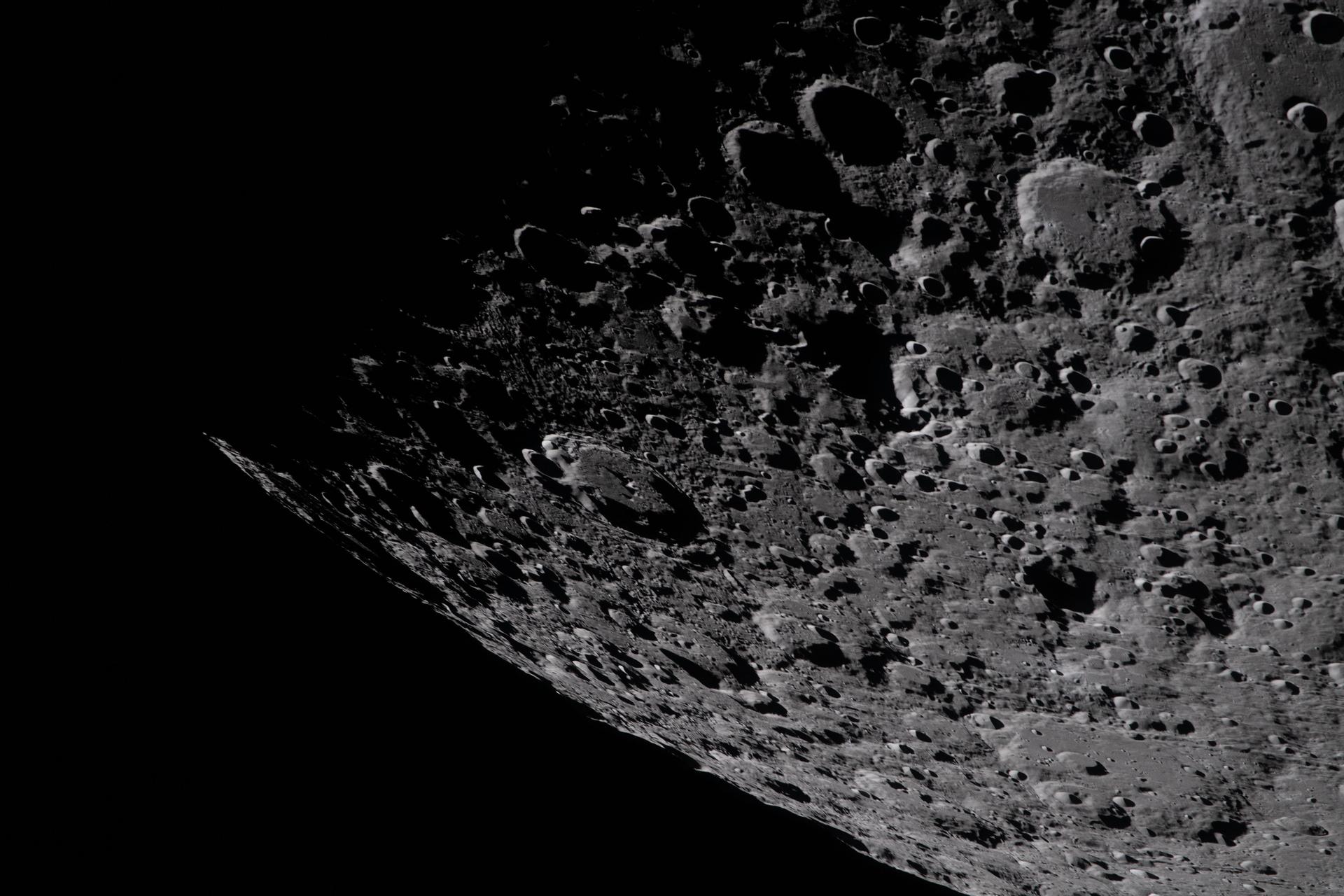
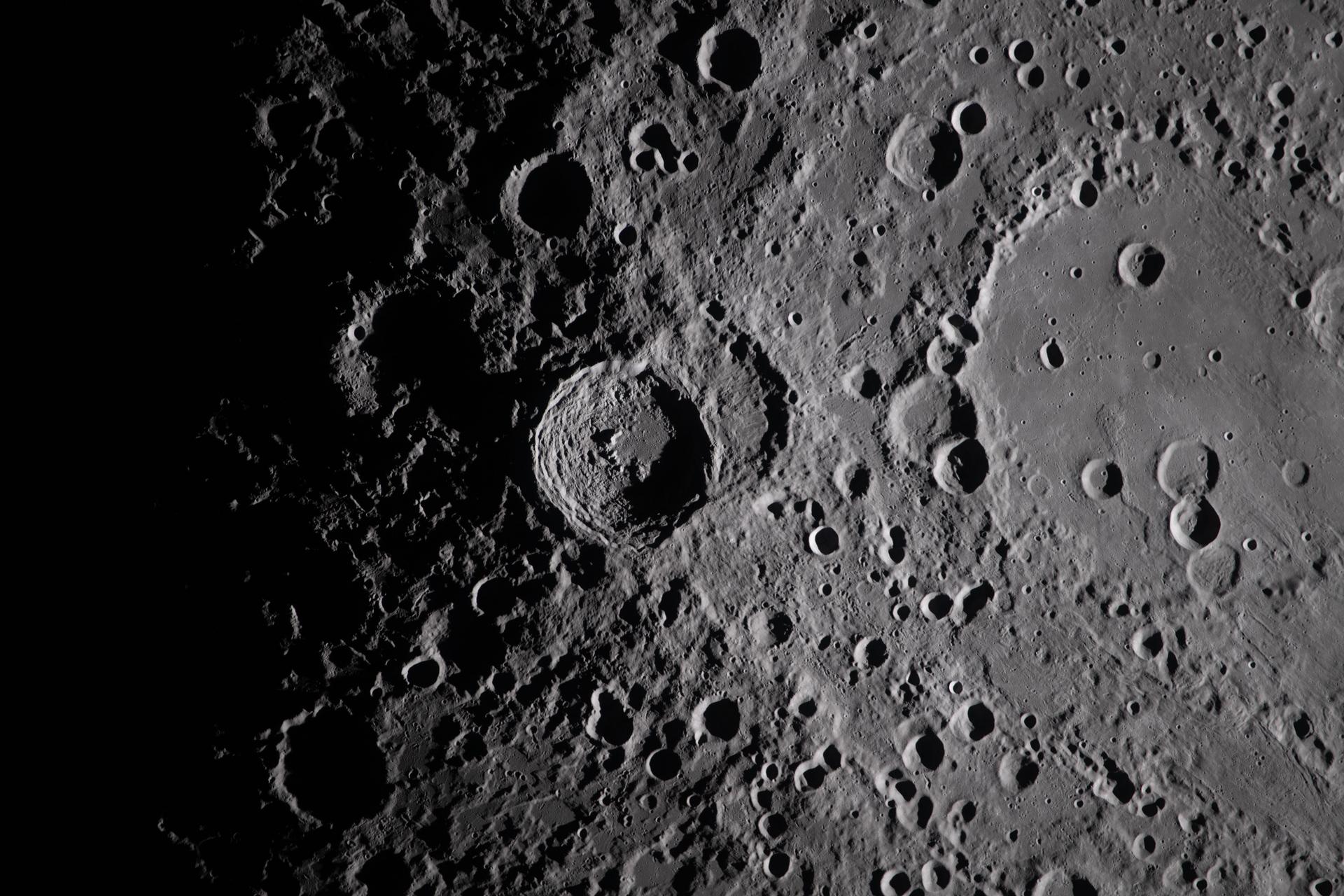
Christina Koch offered a vivid description of the craters: “What it really looks like is like a lampshade with tiny pinprick holes and the light shining through. They are so bright compared to the rest of the Moon.”
The Eclipse No One on Earth Could See
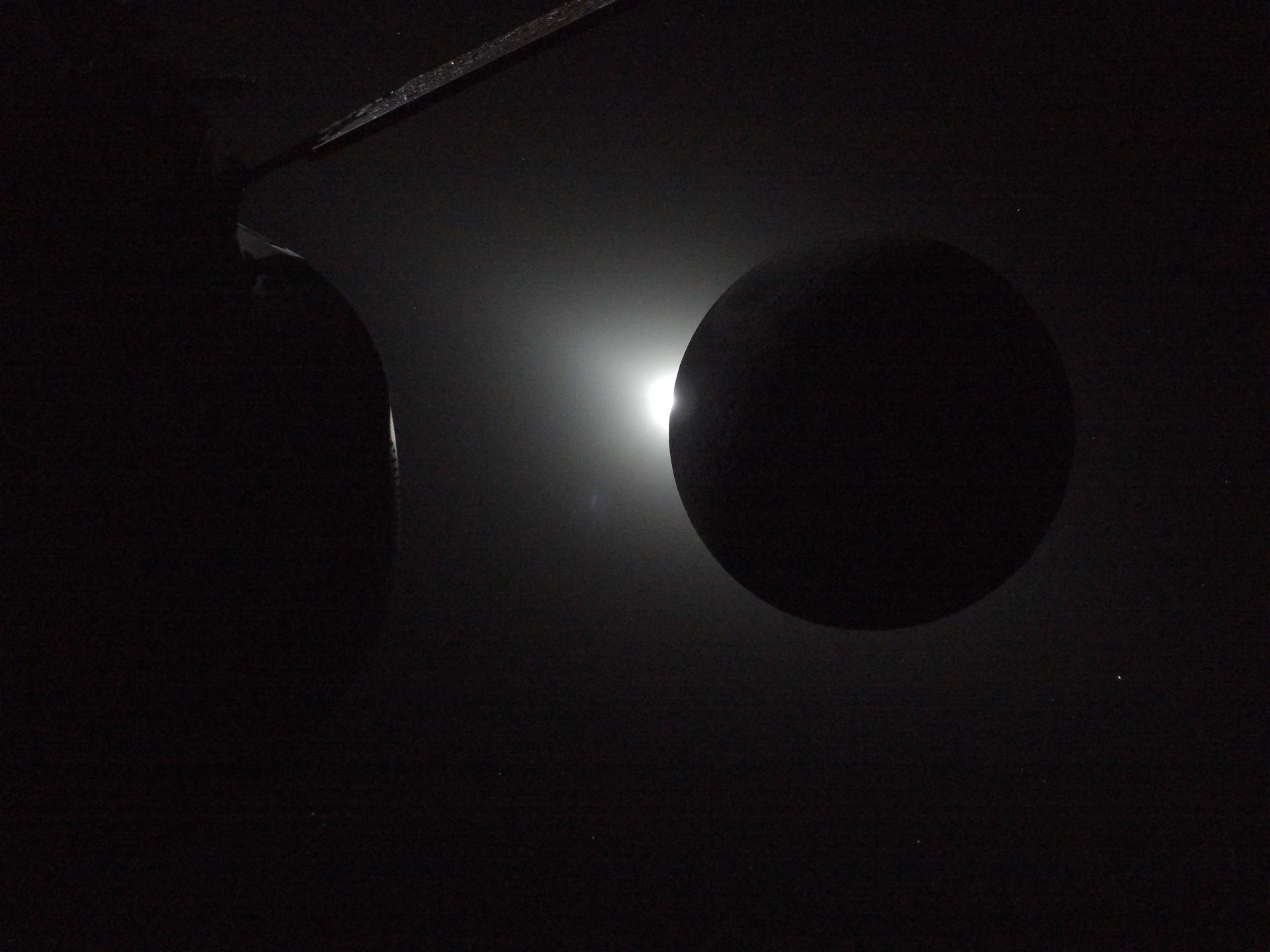
As the flyby entered its final phase, the Sun, Moon, and Orion aligned. From inside the spacecraft, the crew watched the Moon completely block the Sun for 57 minutes of totality, from 8:35 to 9:32 PM EDT. That is not a typo. On Earth, a total solar eclipse lasts minutes at most. From behind the Moon, at 252,000 miles from home, this one lasted nearly an hour.
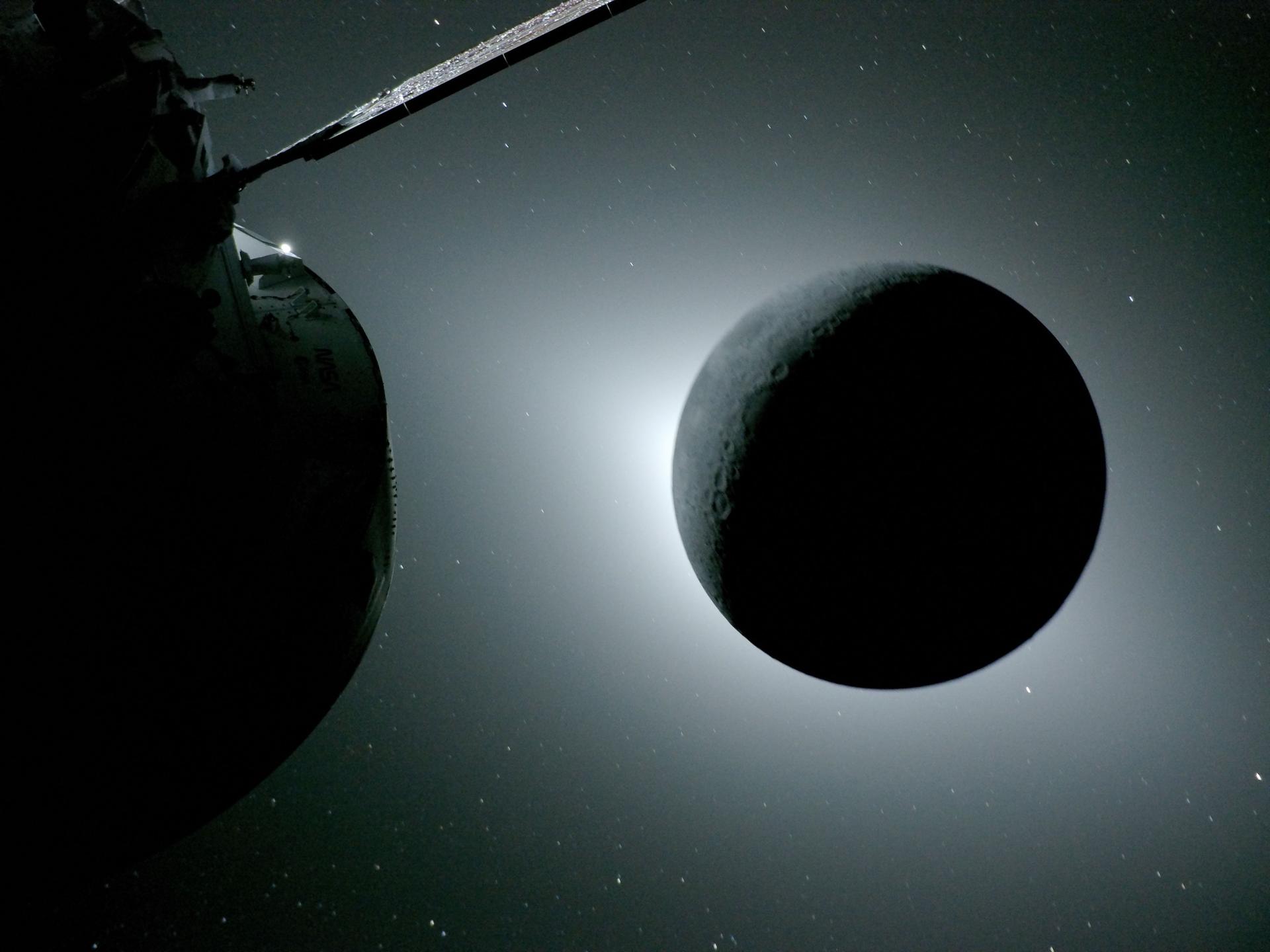
Victor Glover put it simply: “We just went sci-fi. It just looks unreal.”
During the eclipse, the crew studied the Sun’s corona, the outermost layer of its atmosphere, which becomes visible when the solar disc is blocked. They also watched for something far more dramatic: flashes of light from meteoroids striking the lunar surface at thousands of miles per hour. They spotted six impacts. Mission scientists had hoped the crew would catch a glimpse, but they didn’t know how visible the flashes would actually be. The data will help NASA map safer zones for the upcoming Artemis III lunar landing.
Farther Than Anyone Has Ever Been
Two minutes after their closest approach to the Moon, the crew reached a maximum distance of 252,756 miles from Earth, surpassing the record set by Apollo 13 in April 1970. The previous mark of 248,655 miles had stood for 56 years.
Commander Reid Wiseman described one of his favourite moments: “The surprise of the day: we just came out of an eclipse. We could see the corona of the Sun, and then we could see the planet train line up with Mars. And all of us commented how excited we are to watch this nation and this planet become a two-planet species.”
Anyone who has read about the Overview Effect knows what happens to astronauts who see Earth from a great distance: perspective shifts, borders vanish, the fragility of home becomes visceral. For Wiseman, Glover, Koch, and Hansen, that effect played out farther from Earth than any human before them.
A Name on the Moon
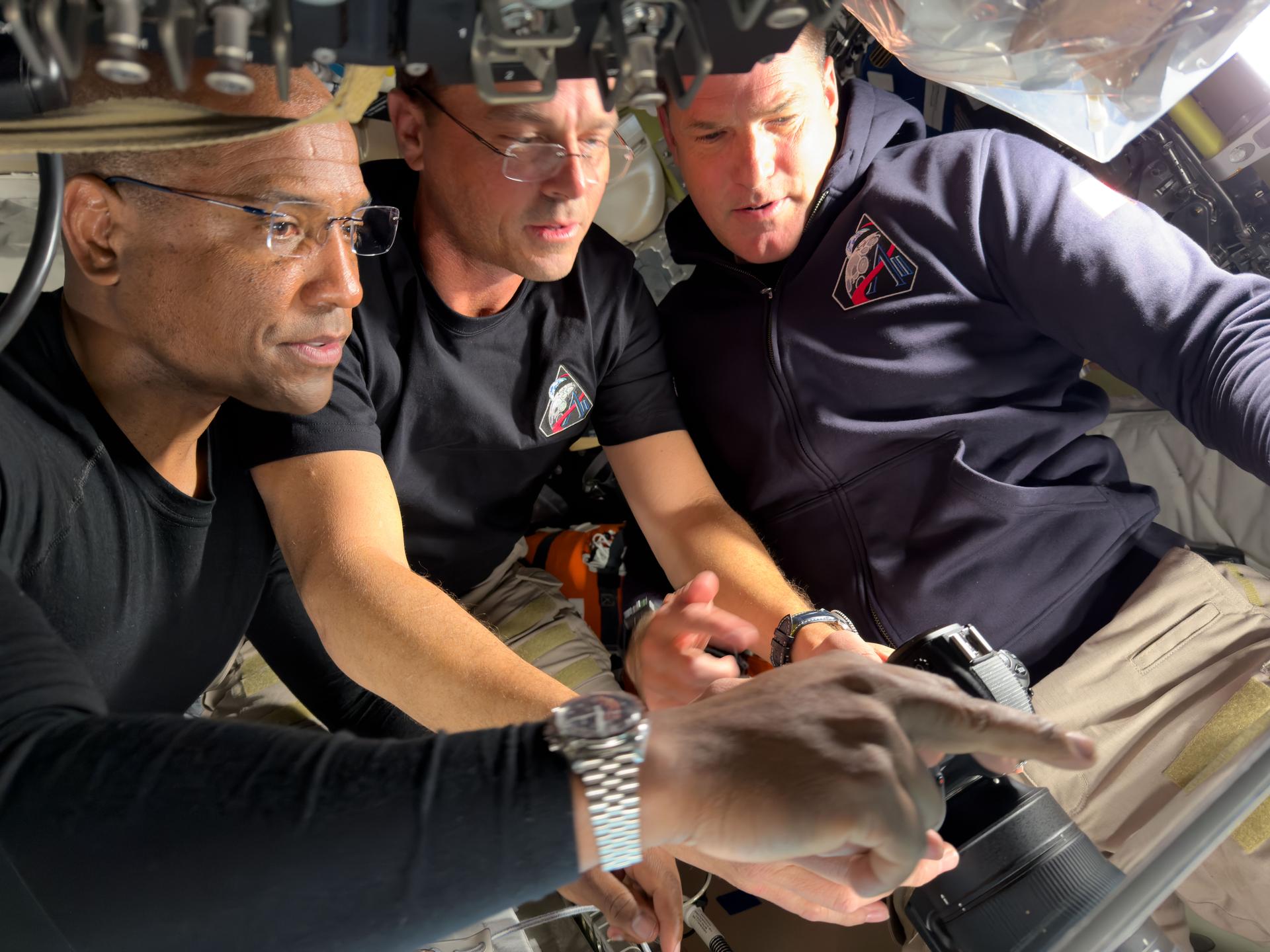
There was one moment the crew had planned privately. As Orion passed over the near side, the astronauts identified a bright feature northwest of Glushko crater. They proposed naming it “Carroll”, after Carroll Wiseman, the commander’s wife, who died of cancer in 2020.
As Hansen spoke the name, Wiseman reached over and put a hand on his shoulder. All four crew members moved into a collective embrace. Wiseman’s daughters were watching from the Mission Control gallery.

What Comes Next
As of today, the crew has exited the lunar sphere of influence and is heading home. Splashdown in the Pacific Ocean off San Diego is expected on the evening of April 10 (around 8 PM ET). The bulk of the 10,000 photographs will not be fully downlinked and processed until after the crew returns, so what we have seen so far is only the beginning.
NASA science officer Dr. Kelsey Young, speaking from Mission Control, captured what the flyby means for what comes next: “I can’t say enough how much science we’ve already learned and how much inspiration you’ve provided to our entire team, the lunar science community, and the entire world. You really brought the Moon closer for us today.”
The meteoroid flash data will feed directly into landing site safety assessments for Artemis III, the mission that will put boots on the lunar surface for the first time since 1972. The Orientale basin observations will give geologists their first human-eye perspective on one of the solar system’s best-preserved giant impact structures. And somewhere in those 10,000 photographs, there are almost certainly views of the Moon that no one, robotic or human, has captured before.
Four people looked back at us from the farthest point any human has reached, and in their photographs, we can see ourselves: a small, luminous world, setting quietly behind the Moon.

