If the Moon Vanished Tonight, You’d Have Weeks to Live
Remove the Moon and Earth gets 6-hour days, no tides, and chaotic seasons. Our planet would become unrecognisable — fast.
One Night, No Moon
Imagine looking up tonight and seeing nothing where the Moon should be. No crescent, no full disc, no pale glow behind the clouds. Just stars all the way down to the horizon.
The Moon does not seem like it does much. It hangs there. It changes shape on a schedule most people ignore. Poets write about it. Tides come in and out. Beyond that, it feels decorative — a night light for a planet that has largely moved indoors.
That impression is completely wrong. The Moon is one of the most important objects in the solar system for life on Earth. It stabilises our axis, governs our tides, slows our rotation, and shields us from ourselves. Remove it, and the consequences cascade from hours to millennia — each one worse than the last.
Still Water
The first thing you would notice is the ocean. Or rather, what the ocean stopped doing.
The Moon is responsible for roughly two-thirds of Earth’s tidal force. The Sun contributes the rest. Without the Moon, tides would still exist, but they would shrink to about a third of their current range. The dramatic ebb and flow that exposes rock pools, reshapes coastlines, and flushes estuaries twice a day would weaken into a faint, solar-only pulse.
That sounds minor. It is not. Tidal zones are among the most biologically productive ecosystems on the planet. They are nurseries for fish, feeding grounds for shorebirds, and nutrient pumps for coastal waters. Weaken the tides and you collapse the engine that drives life along every coastline on Earth.
Mangrove forests, salt marshes, and coral flats all depend on tidal rhythm. Without it, sediment stops cycling, nutrient flow drops, and entire food webs that begin in the intertidal zone start to unravel. The ocean would not die. But its edges — where most marine life actually lives — would go quiet.
A Six-Hour Day
Here is something most people do not realise: Earth used to spin much faster. Billions of years ago, a day lasted only about six hours. The Moon has been slowing us down ever since, dragging on our rotation through tidal friction like a brake pad pressed gently against a spinning wheel.
Without the Moon, that braking force vanishes. Earth would not suddenly speed up — angular momentum does not work that way. But if the Moon had never existed, our planet would still be spinning at close to its original rate. Days would last roughly six to eight hours. Sunrise, midday, sunset, midnight — all compressed into the time it currently takes to get through a morning.
The consequences of a faster spin are violent. Wind speeds scale with rotation. On a six-hour Earth, the Coriolis effect would intensify dramatically, and the jet streams that steer our weather would be tighter, faster, and more numerous. Storms would be more frequent and more powerful. Not slightly more powerful. Fundamentally different — hurricane-force winds would be a routine feature of mid-latitude weather.
The atmosphere itself would redistribute. Faster rotation means a stronger equatorial bulge. Air would pile up around the equator and thin out at the poles, creating sharper temperature gradients and more extreme climate zones.
“Without the Moon, Earth would still be spinning at close to its original rate. Days would last roughly six hours. Winds would be catastrophic.”
Seasons Gone Haywire
This is the big one. The Moon does not just slow our rotation — it stabilises the angle at which we rotate.
Earth’s axial tilt is currently 23.4 degrees. That tilt is what gives us seasons. The northern hemisphere points toward the Sun in June, away from it in December. Summer, winter, and everything in between all depend on that angle staying roughly where it is.
The Moon acts as a gravitational anchor, keeping Earth’s tilt from wandering. Without it, our axis would be at the mercy of gravitational tugs from Jupiter, Saturn, and the Sun. Computer simulations show that over millions of years, a Moonless Earth’s tilt could swing anywhere from nearly zero degrees to over 85 degrees.
At zero degrees, there are no seasons at all. The equator bakes while the poles freeze permanently. Ice sheets advance from both ends. At 85 degrees, Earth essentially rolls on its side like Uranus. Each pole would spend half the year in total darkness and the other half in 24-hour sunlight. Tropical regions would experience months of night followed by months of relentless noon. Temperature swings of 60 to 80 degrees Celsius between seasons would become normal at mid-latitudes.
Neither extreme supports the kind of stable climate that allowed complex life to evolve. The Moon did not just make Earth comfortable. It may have made Earth possible.
True Darkness
Without the Moon, nights would be genuinely dark. Not city-dark. Not overcast-dark. Dark in a way modern humans have almost never experienced.
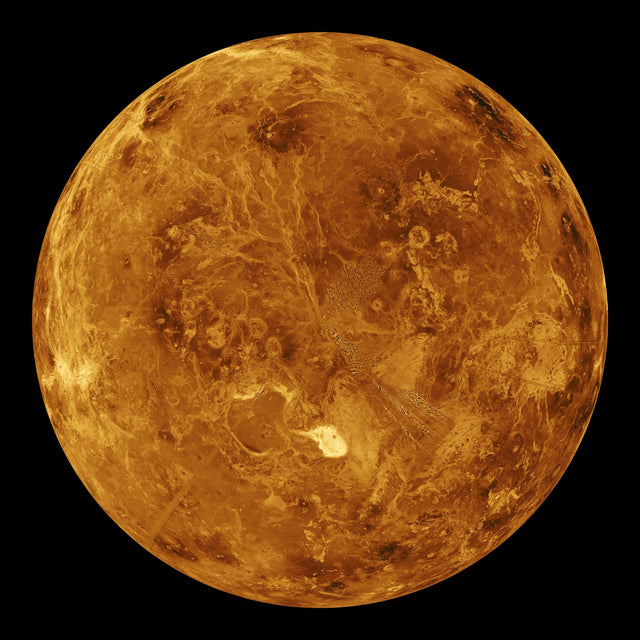
A full Moon reflects enough sunlight to cast shadows and illuminate landscapes. It is bright enough to suppress melatonin production and disrupt sleep. Remove it, and the brightest object in the night sky becomes Venus — a dot. Starlight alone is roughly 300,000 times dimmer than a full Moon.
For billions of years, moonlight shaped the behaviour of life on Earth. Nocturnal predators hunt by it. Coral spawns by it. Sea turtles navigate by it. Dung beetles orient themselves using the polarised glow of the Moon. An entire branch of ecology — lunar chronobiology — exists because so many organisms have synchronised their behaviour to the Moon’s cycle.
Remove the Moon and you do not just remove a light. You remove a clock that half of Earth’s species set their lives by.
“You do not just remove a light. You remove a clock that half of Earth’s species set their lives by.”
Catching Bullets
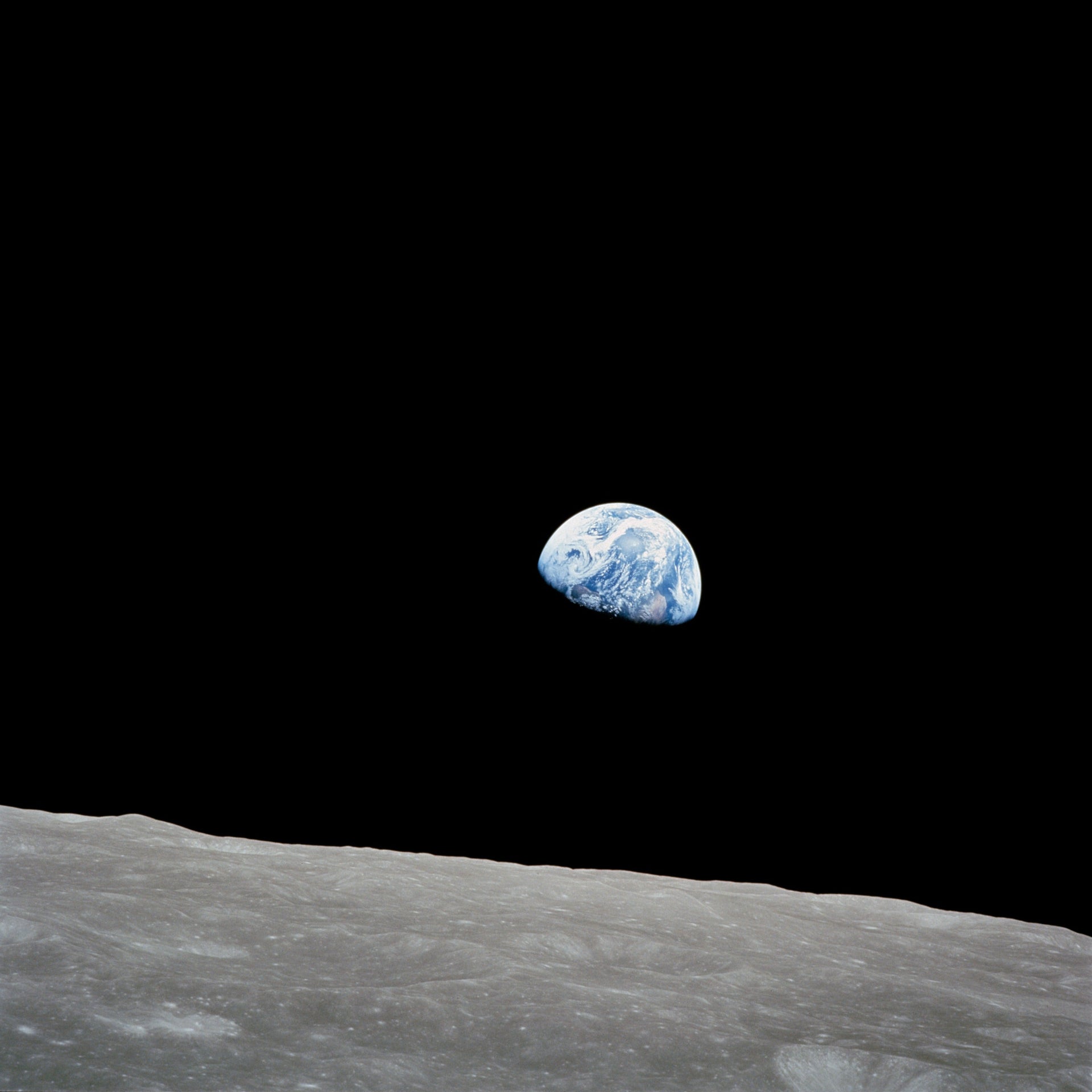
Look at the Moon through binoculars. Every crater you see is an asteroid or comet impact that did not hit Earth.
The Moon’s gravitational field is not large enough to act as a meaningful shield — it does not vacuum up incoming objects the way Jupiter does. But it does present a target. Statistically, over billions of years, the Moon has intercepted a non-trivial number of impactors that might have struck Earth instead. Its battered surface is a record of collisions that our planet was spared.
More importantly, the Moon’s gravitational influence helps stabilise the orbits of near-Earth objects over long timescales. Remove that influence and the inner solar system becomes marginally less predictable. No single asteroid suddenly swerves toward us. But over geological time, the probability distribution of impacts shifts — and not in our favour.
A Different Earth
Remove the Moon and you do not get the same planet minus a pretty thing in the sky. You get a fundamentally different world.
You get an Earth that spins too fast, with days too short for the biology that evolved here. You get weather systems powered by rotation speeds that would make our current hurricanes look gentle. You get an axis that wanders drunkenly over millennia, dragging the climate from ice age to furnace and back again with no pattern and no mercy. You get dark nights, dead coastlines, and a biosphere that lost one of its oldest organising signals.
Life might still exist on a Moonless Earth. Simple life, probably — bacteria and archaea are hard to kill. But the stable, temperate, predictable conditions that allowed life to spend four billion years climbing from single cells to civilisation? Those conditions are not guaranteed. They may not even be likely.
The Moon is not decoration. It is infrastructure. It is the reason our planet has 24-hour days, moderate weather, stable seasons, and a coastline teeming with life. It is a 7.3×10²² kilogram stabiliser bolted to the side of a planet that would be chaotic without it.
Next time you see it, consider what it is actually doing up there. The answer is: everything.