At 8:07 p.m. Eastern time on Friday, April 10, 2026, four human beings fell out of the sky and into the Pacific Ocean. They had been gone for ten days. They had traveled 695,000 miles. They had seen the far side of the Moon, watched the Sun disappear behind it for nearly an hour, and set a record for the farthest any human has ever been from Earth. And now, dangling beneath three parachutes in the fading California light, they were home.
The Last Six Minutes
Reentry is the part of spaceflight that nobody romanticizes. There is no view. There is no floating. There is a spacecraft hitting the atmosphere at more than 24,000 miles per hour, and there is fire.
At 7:53 p.m. ET, the Orion capsule carrying Commander Reid Wiseman, Pilot Victor Glover, and Mission Specialists Christina Koch and Jeremy Hansen struck the upper atmosphere. The exterior temperature climbed past 5,000°F. A sheath of superheated plasma wrapped around the capsule and, for six minutes, severed every link between the crew and the ground. No voice, no telemetry, no data. Just four people inside a machine built to survive something nothing else can.
In Mission Control, silence. In living rooms and watch parties across the world, silence. Six minutes is not long. It felt infinite.
Then the signal came back.
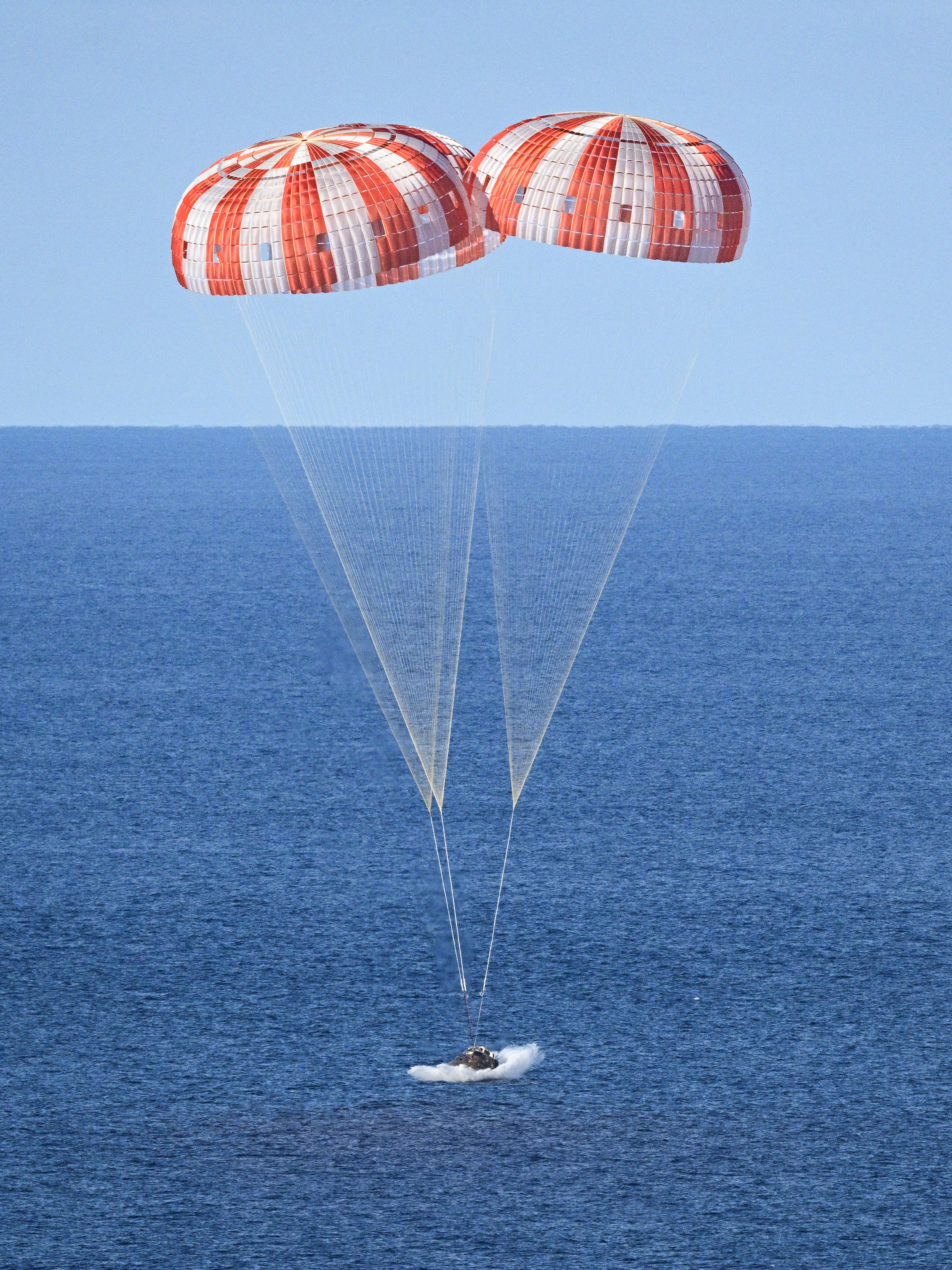
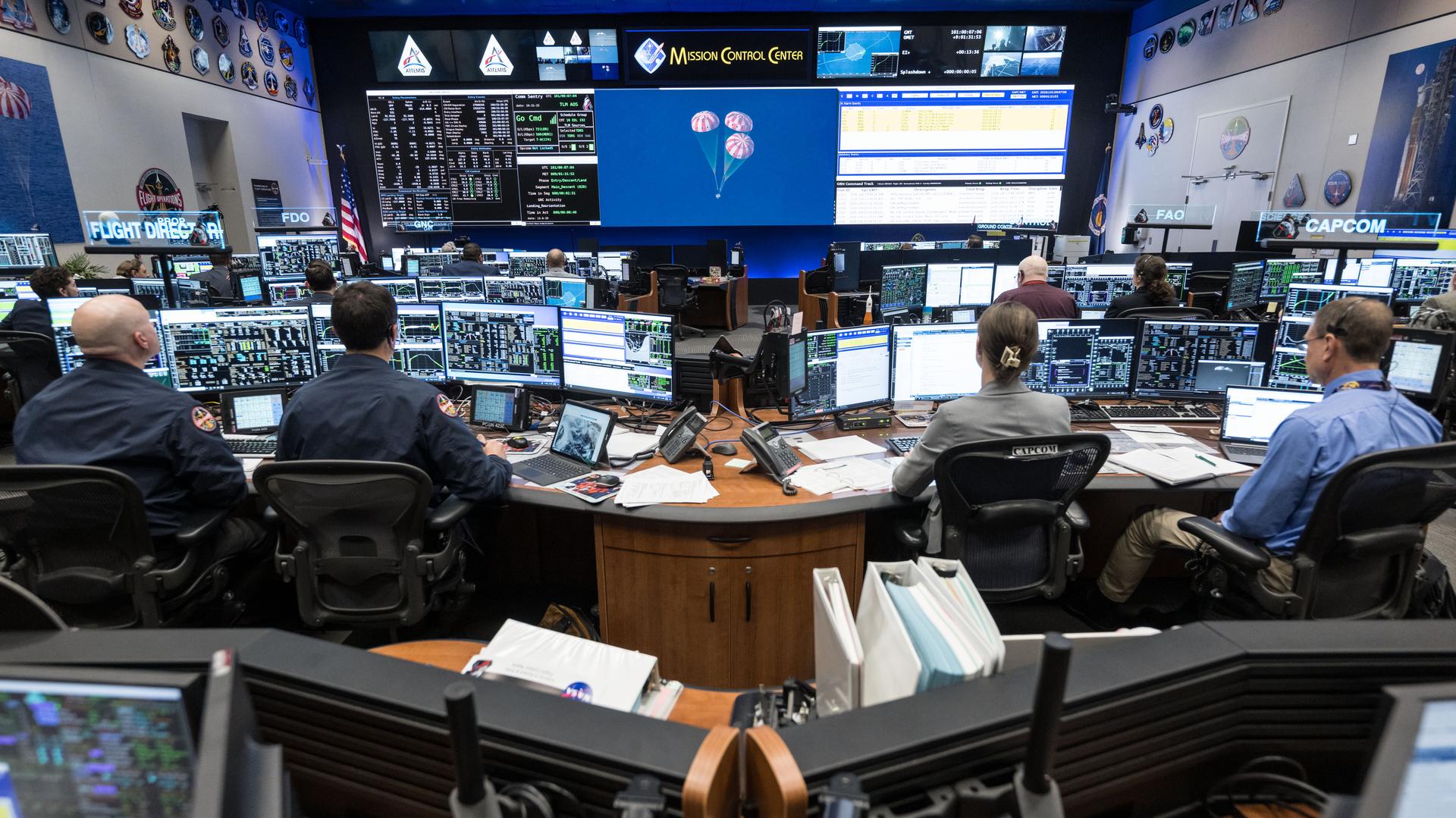
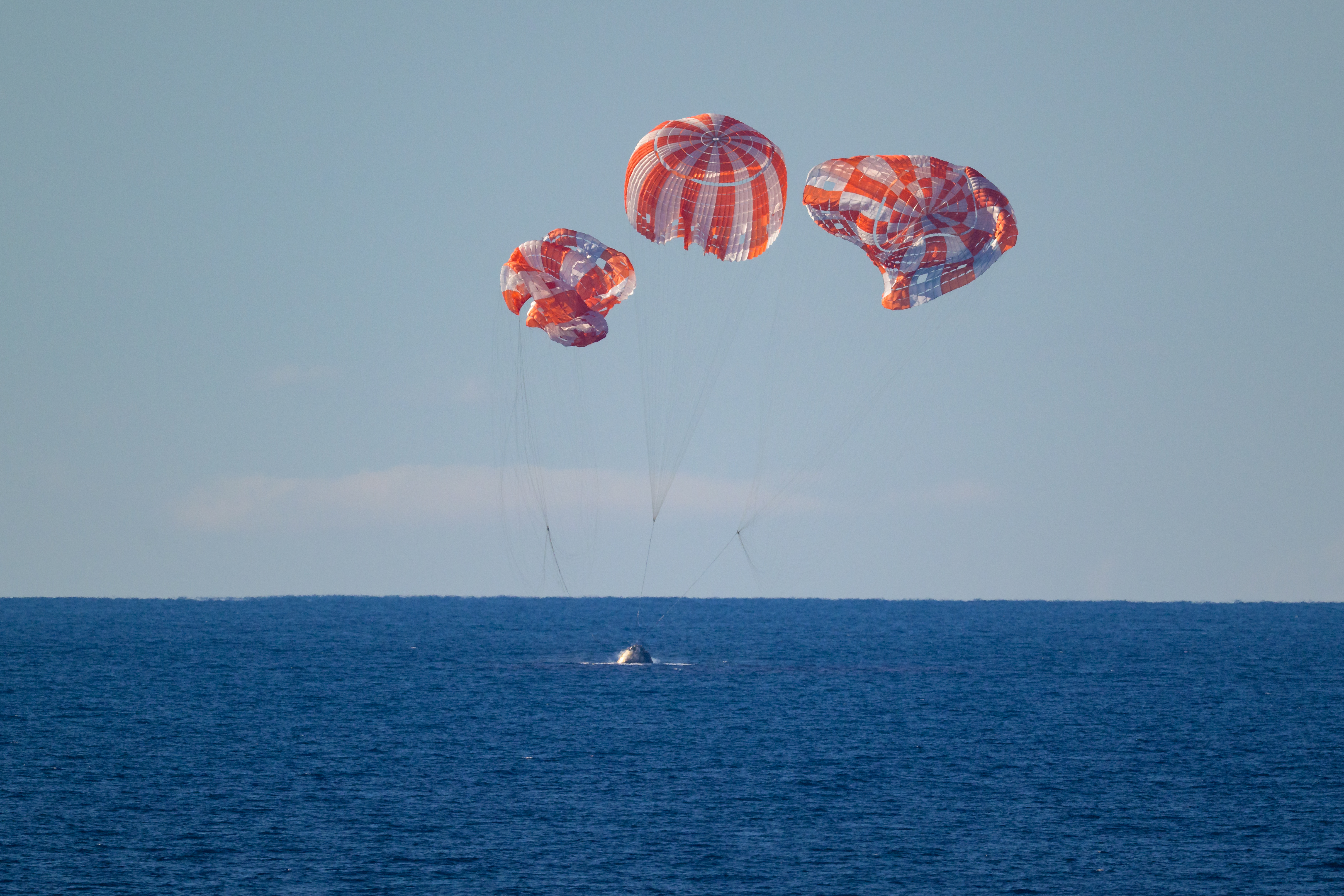
At 8:03 p.m., Orion jettisoned its forward bay cover and released its drogue parachutes at 22,000 feet. One minute later, at roughly 6,000 feet, the three main parachutes unfurled — enormous canopies of red and white against the dusk sky — and slowed the capsule from hundreds of miles per hour to about twenty.
Howard Hu, NASA's Orion program manager, later admitted what he was doing during the parachute sequence: "I was chanting, 'go, go, go' by myself. That was just a tremendous moment."
Bullseye
The capsule hit the water 40 to 50 miles off the coast of San Diego. Mission Control called it "a perfect bullseye splashdown." Commander Wiseman's voice crackled through the comm: "Four crew green."
Four crew green. The most understated sentence in the English language. What it meant: every human who left Earth ten days ago has returned alive and well.
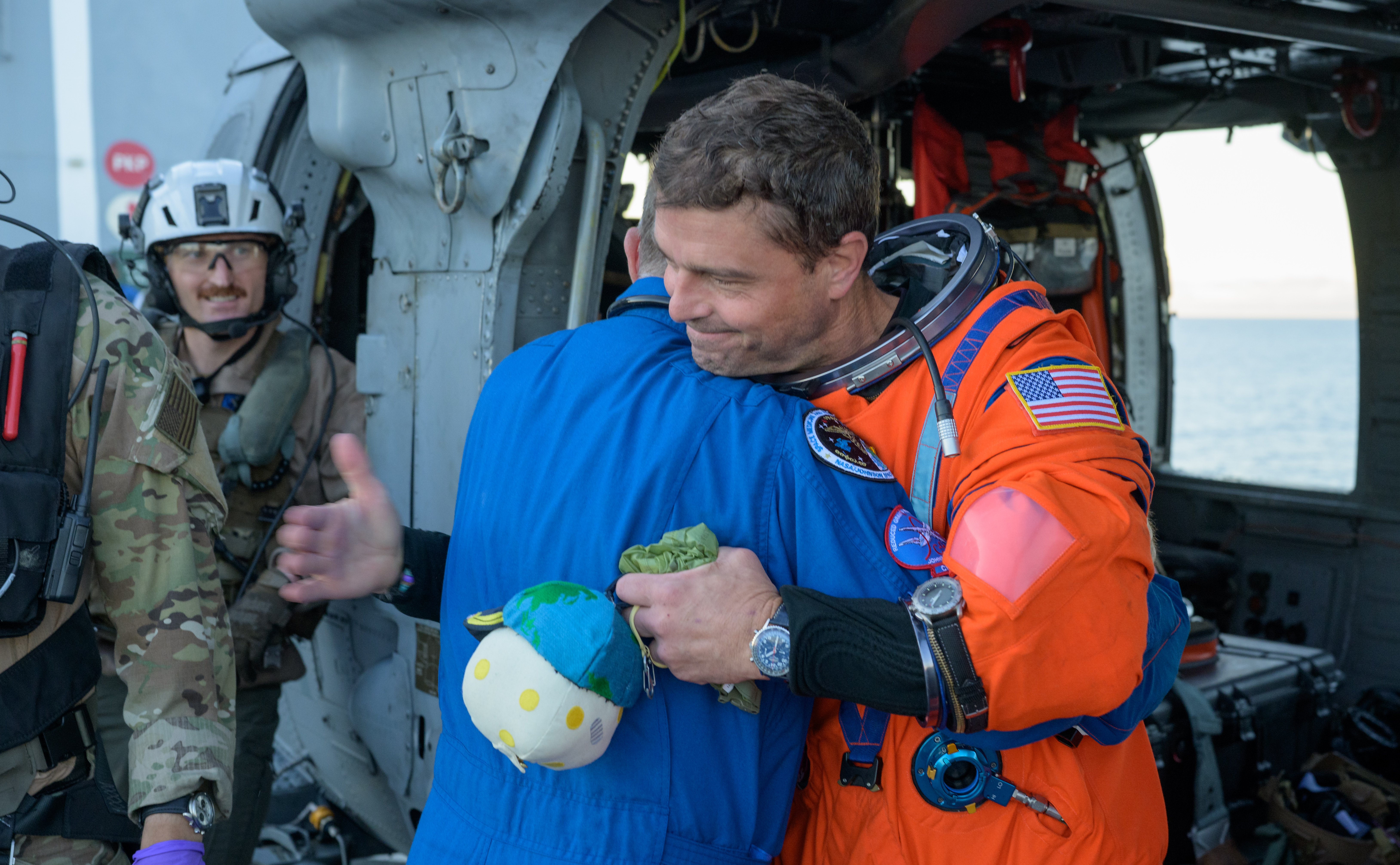
Recovery teams from the USS John P. Murtha moved into position. Navy divers entered the water, attached a tow cable, and guided the capsule toward the ship's well deck. Within an hour, the side hatch swung open. One by one, four astronauts emerged into the ocean air, blinking under floodlights, visibly tired, unmistakably elated.
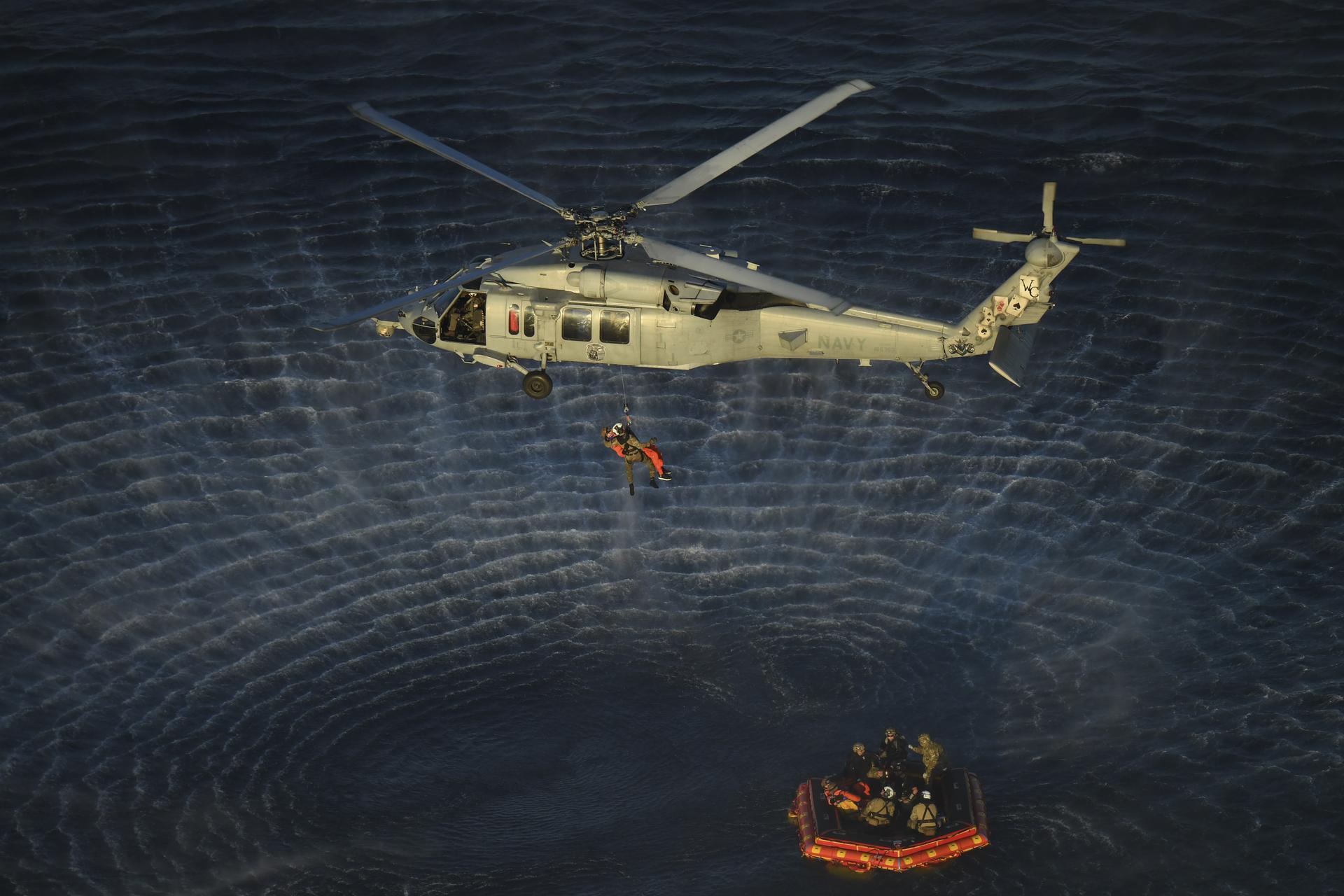
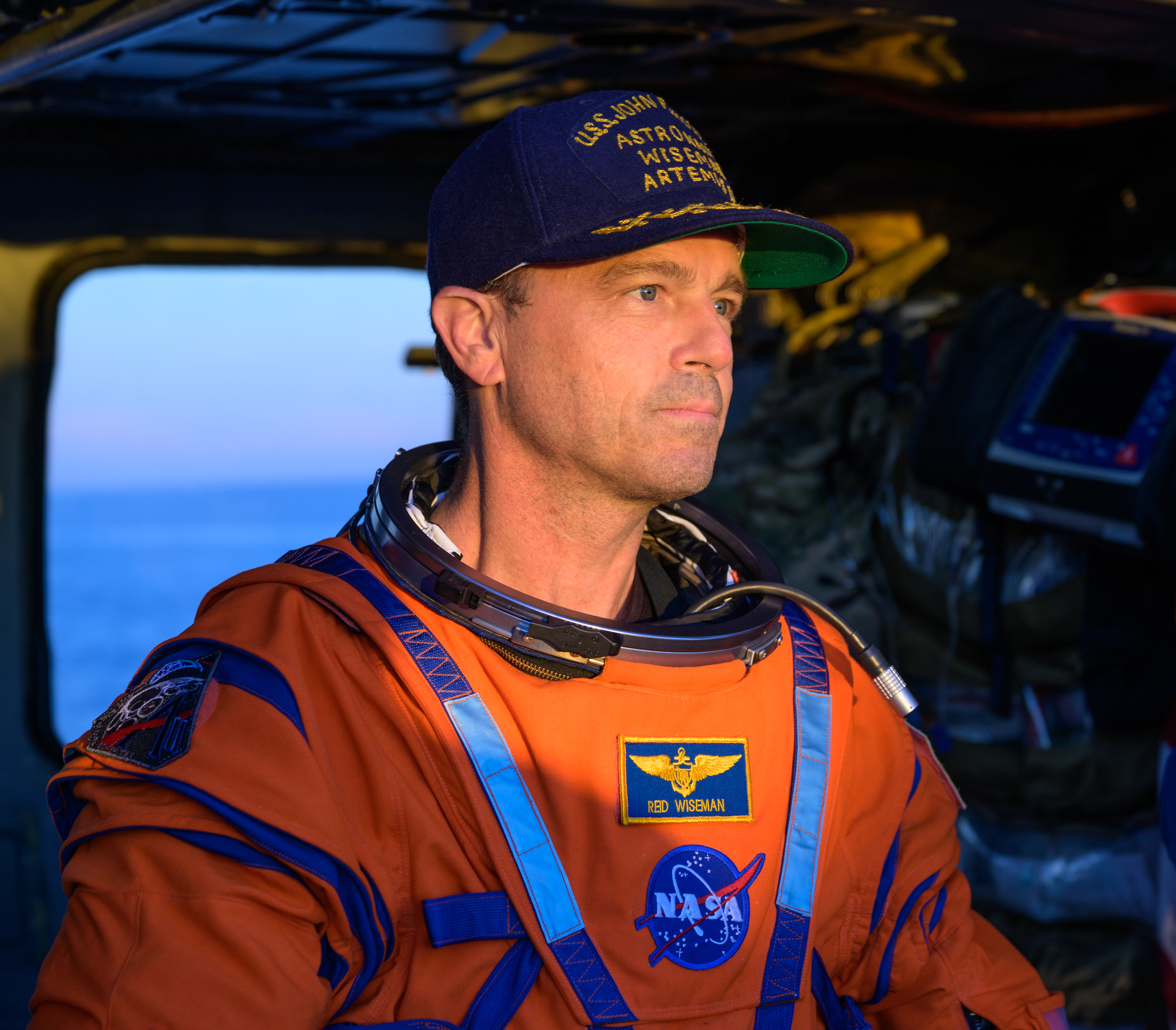
They were flown by helicopter to the Murtha for medical evaluations. Later, they would board a plane to Houston. But for a few minutes, they stood on the deck of a ship in the Pacific and breathed air that hadn't been recycled.
What They Carried Back
Ten days ago, Artemis II launched from Kennedy Space Center. It was April 1, 2026 — a date the crew joked about. Nobody was laughing when the solid rocket boosters lit.
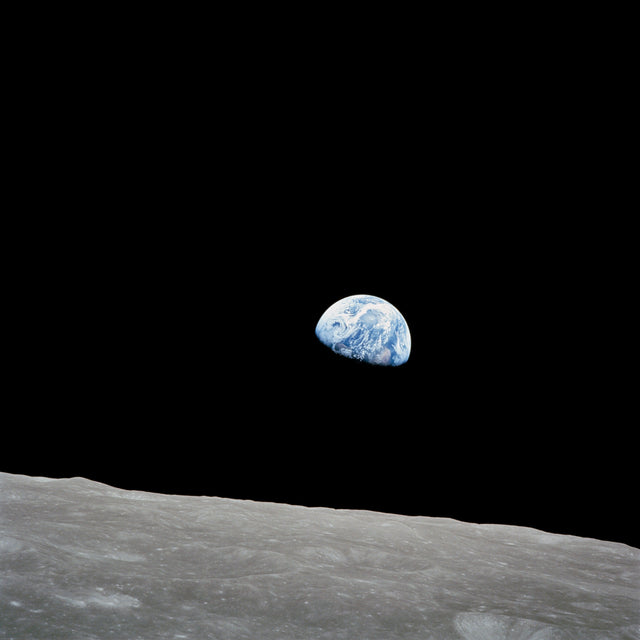
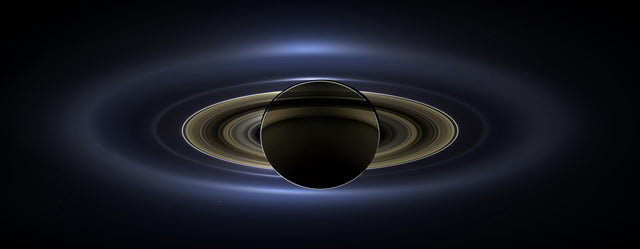
Over the course of the mission, the crew flew farther from Earth than any human in history: 252,756 miles, eclipsing the record set by Apollo 13 in 1970 by more than 4,000 miles. They completed a seven-hour flyby of the lunar far side, photographing terrain that no human eye had ever directly observed. They witnessed a solar eclipse from behind the Moon that lasted 57 minutes — a duration impossible from Earth's surface. They spotted six meteoroid impacts on the lunar surface, data that will directly inform landing-site safety assessments for Artemis III.
They proposed naming a bright feature near Glushko crater "Carroll," after Commander Wiseman's late wife. When the name was spoken aloud, the four crew members embraced. Wiseman's daughters were watching from the Mission Control gallery.
They took approximately 10,000 photographs. Most of them have not yet been downlinked. What the world has seen so far is a fraction of what these four people witnessed.
The Heat Shield Question
No account of this splashdown is complete without addressing the heat shield. During the uncrewed Artemis I mission in 2022, engineers discovered that portions of Orion's Avcoat heat shield had cracked during reentry, with charred material breaking away in several locations. The cause: gases trapped in the outer material failed to vent properly, and pressure accumulated.
NASA spent years analyzing the issue, ultimately concluding that the risk to Artemis II was acceptably low. They were right — the crew returned safely. But the agency has confirmed that it will conduct a thorough post-flight inspection of the Artemis II heat shield to assess its condition. The findings will be critical for Artemis III, the mission that will attempt to land astronauts on the lunar surface.
Spaceflight does not permit the luxury of ignoring what went wrong last time. That NASA flew the crew anyway, with full knowledge of the Artemis I anomaly, is a statement about how risk is weighed against purpose. The heat shield held. The data will show whether it held comfortably or barely.
Why This Matters
Fifty-three years passed between the last Apollo splashdown and this one. In that time, humanity built a space station, launched telescopes that can see the first galaxies, and sent robots to Mars. But no one went back to the Moon. No one went beyond low Earth orbit. The farthest point any human occupied was 254 miles up, aboard the International Space Station. For more than half a century, the Moon was a memory.
Victor Glover, reflecting on reentry before the mission's end, said: "Riding a fireball through the atmosphere is profound. I'm gonna be thinking about and talking about all of these things for the rest of my life."
Entry Flight Director Rick Henfling, who guided the spacecraft through its final descent, was candid about the tension: "If you didn't have anxiety bringing the spacecraft home, you probably didn't have a pulse."
And Amit Kshatriya, NASA's associate administrator, framed the mission in terms the agency has rarely used: "Fifty-three years ago, humanity left the Moon. This time we returned to stay. Let us finish what they started. Let us not go to plant flags and leave — but to stay."
What Comes Next
The crew will spend the coming weeks in debriefings at Johnson Space Center. The 10,000 photographs will be processed and released. The heat shield will be examined. The data from six meteoroid impacts will be fed into models that determine where, exactly, Artemis III astronauts will set foot on the lunar surface.
Artemis III, the landing mission, does not yet have a firm date. But it is no longer hypothetical. Every system that III depends on — the Space Launch System, the Orion capsule, the service module, the ground infrastructure, the recovery operations — has now been proven with a crew aboard. The path from here is engineering, not imagination.
Jeremy Hansen, the first Canadian to travel beyond low Earth orbit, captured it with characteristic understatement during the crew's in-flight press conference: "We're not just visiting. We're learning how to go back."
On a Friday evening in April, in the Pacific Ocean off San Diego, a capsule hit the water and four people came home. The Moon is no longer a memory. It is a destination again.