She never had her name on a mission. For decades, Nancy Grace Roman worked the corridors of NASA as an administrator, a bureaucrat, the woman who convinced committees and Congress that a large space telescope was not only possible but worth the cost. When the Hubble Space Telescope finally launched in 1990, it changed what humanity knew about the universe. Her name appeared nowhere on it.
She died on December 25, 2018. Today, at NASA's Goddard Space Flight Center in Greenbelt, Maryland, the agency unveiled the telescope that bears her name, fully assembled and ready to leave Earth for the last time.
A Telescope Completed
The Nancy Grace Roman Space Telescope finished construction on November 25, 2025, when engineers integrated its two major segments at Goddard. On April 21, 2026, NASA held a formal public unveiling: one of the final opportunities to see the spacecraft intact before it ships to Kennedy Space Center in Florida for launch preparations. A SpaceX Falcon Heavy rocket is scheduled to carry it to the Sun-Earth L2 Lagrange point, 930,000 miles (1.5 million kilometers) from Earth, with launch currently targeted for fall 2026 and a hard deadline of May 2027.
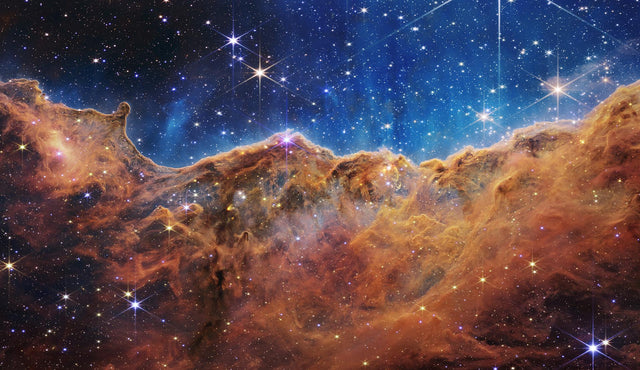
Roman will settle into the same gravitationally stable orbit occupied by the James Webb Space Telescope, shielded from solar interference in the direction away from the Sun. From there, its 2.4-meter primary mirror will begin the largest photographic survey of the sky ever attempted from space.
What Roman Can Do That Hubble Cannot
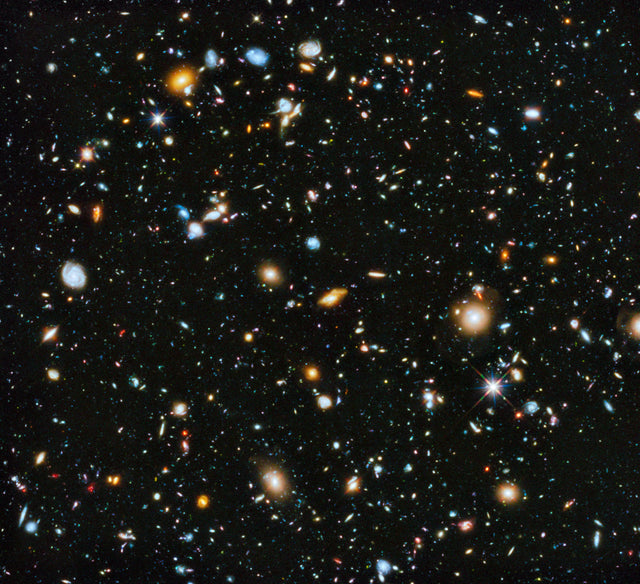
Roman's primary instrument is its Wide Field Instrument (WFI): a 300.8-megapixel camera operating in visible and near-infrared light. Its field of view covers 0.28 square degrees of sky, 100 times larger than Hubble's infrared camera, at identical resolution. Where Hubble photographs the universe in extraordinary close-up, Roman photographs it in panorama, and then photographs the next panorama, and the next. In a single year, Roman can survey as much of the sky as Hubble has covered in more than three decades of operation.

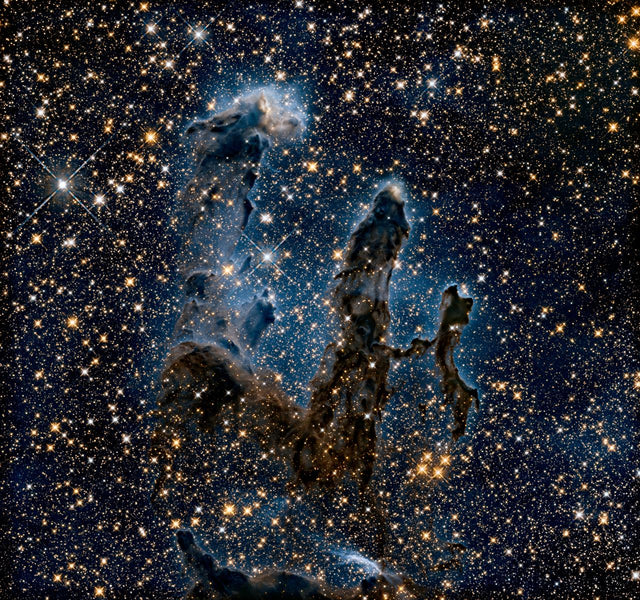
Astronomers expect Roman to reveal on the order of 100,000 transiting exoplanets through a combination of transit detection and gravitational microlensing. For context, as of 2026, humanity has confirmed roughly 5,700 exoplanets in total. Roman will add to that number in a single survey.
Pointed outward past the galaxy, Roman's High Latitude Wide Area Survey will image billions of distant galaxies and track tens of thousands of Type Ia supernovae. Scientists will trace the expansion of the universe across time and constrain the behavior of dark energy with roughly 10 times the precision of current measurements.
The Woman Behind the Name
Nancy Grace Roman was born in Nashville, Tennessee in 1925. She earned her Ph.D. in astronomy from the University of Chicago in 1949, then joined the fledgling NASA in 1959. She became its first Chief of Astronomy, the first woman to hold executive rank at the agency. She is remembered as the "Mother of Hubble" for clearing the institutional path for a mission that would outlast her by decades.
In May 2020, NASA renamed the Wide Field Infrared Survey Telescope the Nancy Grace Roman Space Telescope. She had died eighteen months earlier.
What Comes Next
Roman will ship to Kennedy Space Center in the coming weeks for environmental testing and final launch preparations. If the current schedule holds, it lifts off in September 2026. First science observations are expected within months of arrival at L2, with the primary five-year survey mission beginning in 2027.
Most of what Roman will find has no name yet. Some of it may have no category.
The universe Nancy Grace Roman spent her career arguing was worth looking at is about to come into focus at 100 times the width of anything she lived to see.